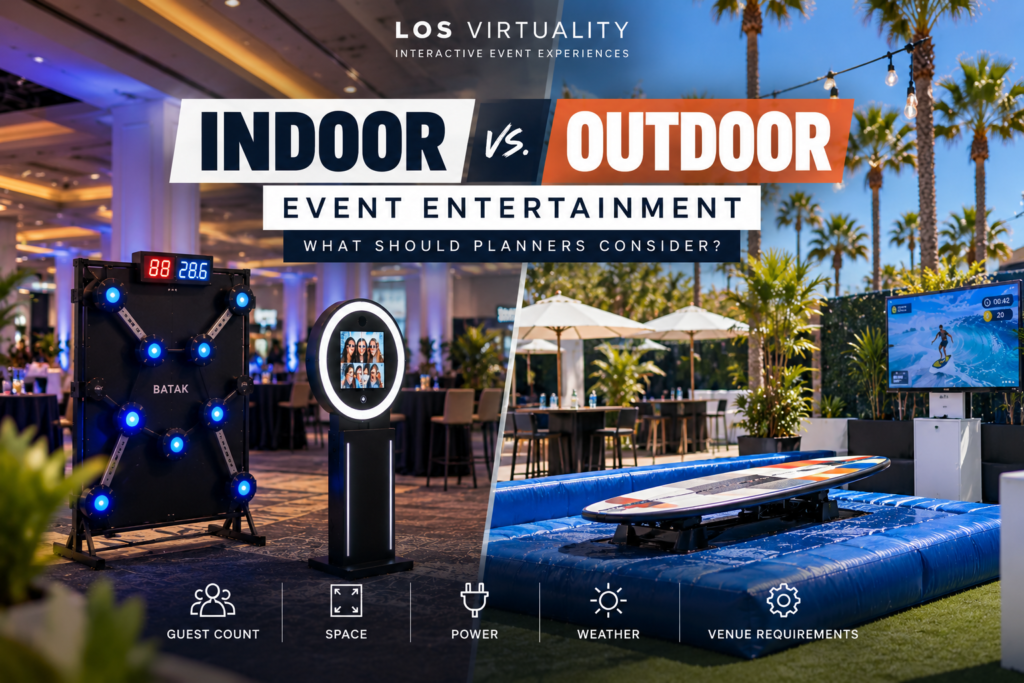
Indoor vs. Outdoor Event Entertainment: What Should Planners Consider?
Choosing event entertainment isn’t just about finding an experience your guests will enjoy. Where that experience will be set up can be just as important.
An activation that works perfectly inside a ballroom, convention center, or trade show booth may require a different approach outdoors. Weather, direct sunlight, power access, flooring, available space, guest traffic, and equipment coverage can all affect how an experience operates and how easily guests can participate.
Those environmental factors aren’t minor concerns for planners, either. According to OnePlan’s 2026 event industry survey, 61% of event professionals said weather and external factors were their biggest source of stress, while 44% cited venue limitations. Planning for the environment early can help prevent those challenges from affecting the experience on event day.
That doesn’t mean planners need completely different entertainment for every venue. Many interactive experiences can work both indoors and outdoors. The key is understanding what changes between the two environments and planning for those differences before event day.
In this guide, we’ll break down the most important indoor vs. outdoor event entertainment considerations, look at interactive experiences that can work in both settings, and help you determine which setup makes the most sense for your event.
Table of Contents
7 Factors to Consider for Indoor vs. Outdoor Event Entertainment
The biggest difference between indoor and outdoor event entertainment isn’t always the experience itself. It’s the environment around it.
Indoor venues typically give planners more control over weather, lighting, flooring, and power access, while outdoor events may offer more flexibility with space and layout. However, outdoor setups can introduce additional considerations like direct sunlight, uneven surfaces, heat, wind, rain, and access to reliable power.
Before choosing interactive event entertainment, consider the following key factors.
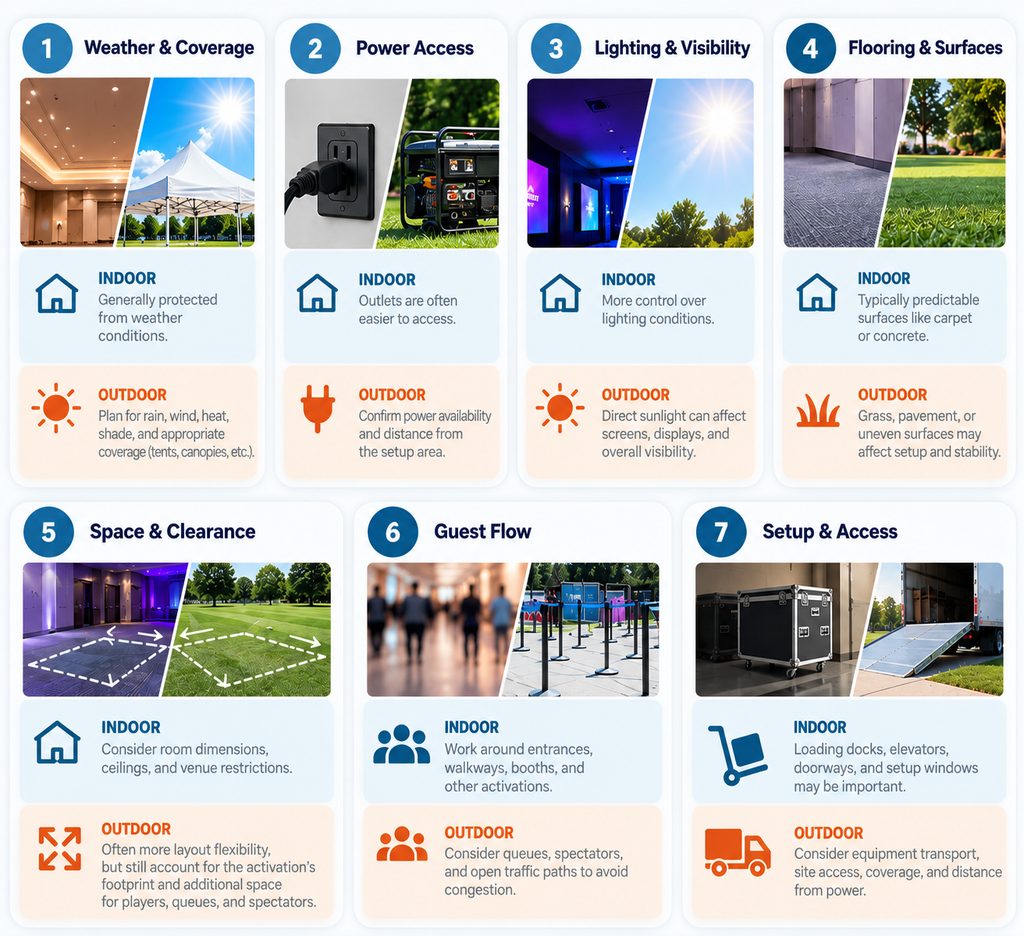
An experience may technically work in both environments, but these factors determine whether it will work well in the space. Next, let’s look at interactive experiences that can be used indoors and outdoors and what planners should consider for each.
One Experience, Two Environments: Entertainment That Works Indoors and Outdoors
The right venue doesn’t always require a completely different entertainment plan. Many interactive experiences can transition between indoor and outdoor events when the setup is planned around the environment. An activation that feels compact and controlled inside a ballroom may need additional considerations for surface conditions, weather coverage, power, or visibility when it moves outdoors.
Below are several interactive experiences that give planners flexibility across both settings.
1. Catch the Stick: Fast Competition, Flexible Setup
Catch the Stick turns a simple reaction test into an instant competition. Players stand beneath a series of hanging sticks and react as they drop at random, trying to catch them before they hit the ground. Since rounds are quick and the challenge is easy to understand, guests can jump in without a long learning curve.
This can be a strong option for larger corporate events, trade shows, and brand activations where planners want steady participation without committing guests to a lengthy experience.
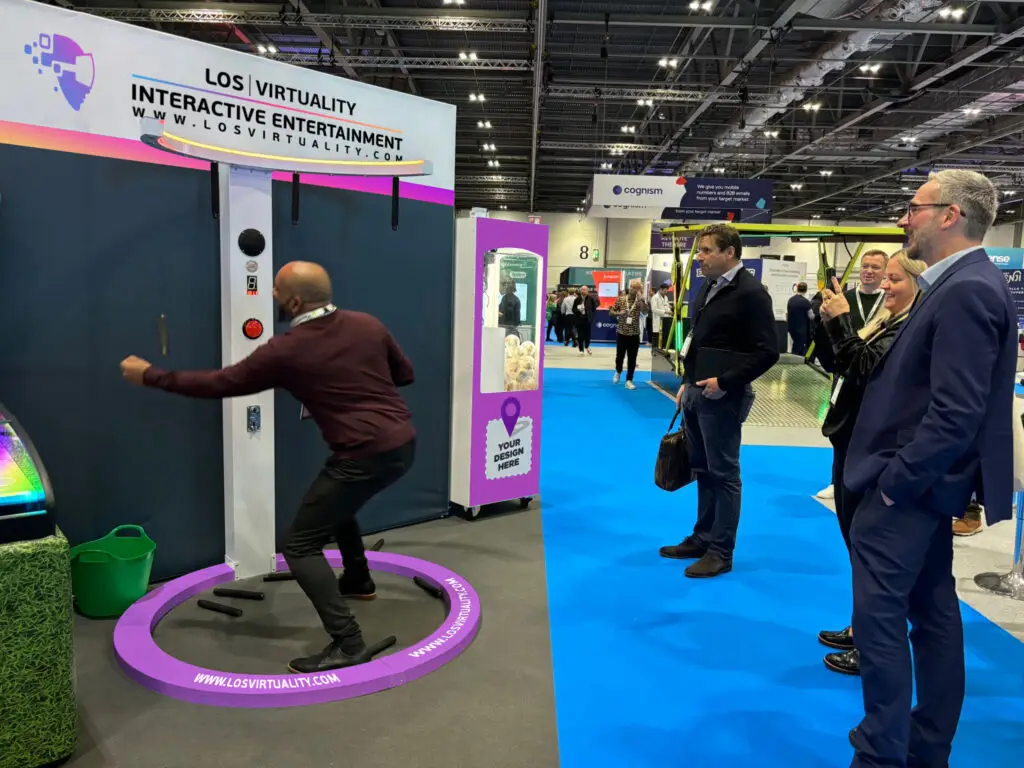
Session Run Time: 1-2 minutes
Space Required: 5 ft x 5 ft recommended play area
Capacity: 1 player at a time; approx. 30 participants per hour
For either environment, the competitive format also creates opportunities for leaderboards, prizes, and branded challenges, turning a quick reaction game into a larger event activity.
2. BATAK Reaction Challenge: Big Competition in a Small Footprint
When event space is limited but you still want an experience that attracts attention, BATAK offers a lot of interaction without requiring a large activity area. Players race against the clock to hit illuminated targets as they appear, testing reaction speed, coordination, and focus.
BATAK can keep participation moving while giving guests a score to beat. That competitive element makes it especially useful for corporate events and trade shows, where scores, leaderboards, or prizes can encourage coworkers and attendees to challenge one another throughout the event.
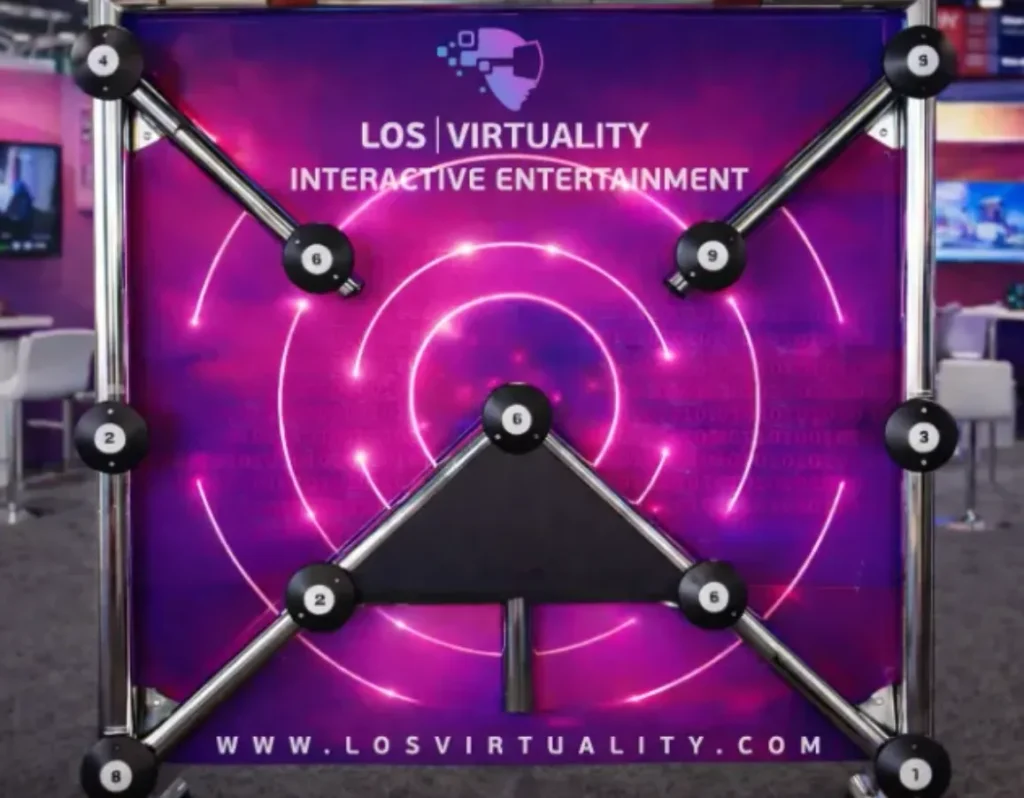
Session Run Time: 1-2 minutes
Space Required: 6 ft x 6 ft recommended play area
Capacity: 1 player at a time; approx. 30 participants per hour
Whether it’s used as a quick standalone challenge or part of a larger mix of interactive event entertainment, BATAK gives planners a compact way to add competition without requiring guests to spend a long time at one activation.
3. AI Photo Booth: Personalized Content in Any Setting
Not every interactive experience needs to be competitive. An AI Photo Booth gives guests a chance to create personalized images based on the event’s theme, turning a quick photo into something they can save and share.
For corporate events and brand activations, the experience can also be customized with branded visuals, themed backgrounds, and event-specific concepts, making it both entertainment and a way to extend the event’s identity.
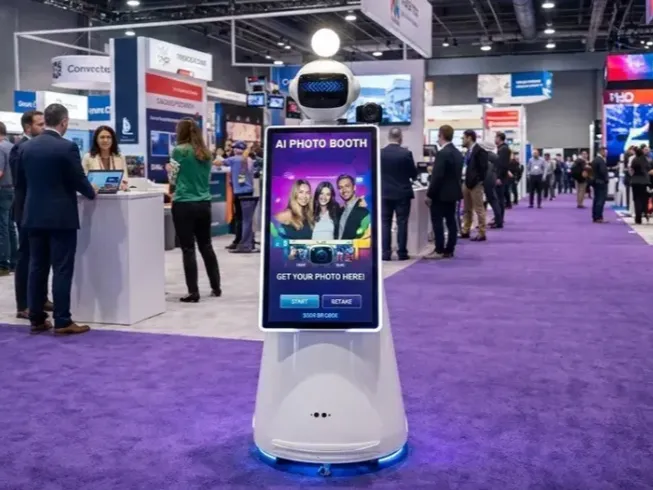
Session Run Time: 2-3 minutes
Space Required: 4 ft x 4 ft recommended play area
Capacity: 3 guests at a time; approx. 90 participants per hour
For planners looking for interactive event entertainment that doesn’t depend on competition, an AI Photo Booth offers a flexible option that gives each guest something personalized to take away from the event.
4. Soccer Reaction Ring: High-Energy Play That Draws a Crowd
The Soccer Reaction Ring brings movement and competition into the event by challenging players to react quickly and kick the ball toward illuminated targets around the ring. It’s active, easy for spectators to follow, and naturally creates opportunities for friendly competition.
Since the action is visible from outside the experience, it can do more than engage the person playing. Guests nearby can watch, cheer, and wait to challenge the current score, making it a strong option for corporate events, brand activations, and other high-energy environments.
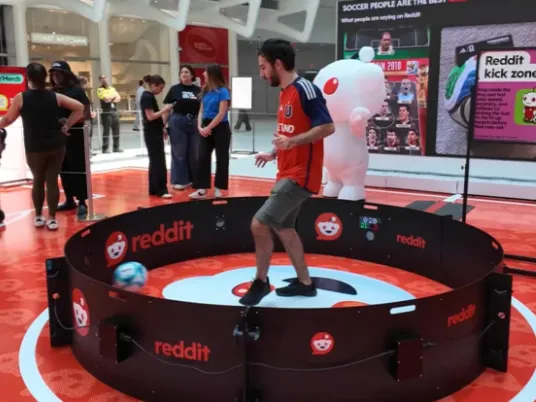
Session Run Time: 2-3 minutes
Space Required: 8.2 ft diameter recommended play area
Capacity: 1 player at a time; approx. 40 participants per hour
For planners who want interactive entertainment with movement and spectator appeal, the Soccer Reaction Ring can create an energetic focal point in both indoor and outdoor event layouts.
5. Surf Simulator: Bring the Waves Indoors or Out
A Surf Simulator turns balance into entertainment, challenging guests to stay on the board while the simulator recreates the movement of riding a wave. The action is easy to watch from the sidelines, giving the experience both participant and spectator appeal.
Its larger, more visual setup can also help create a focal point within an event, particularly when planners want an activity that guests can notice from across the space.
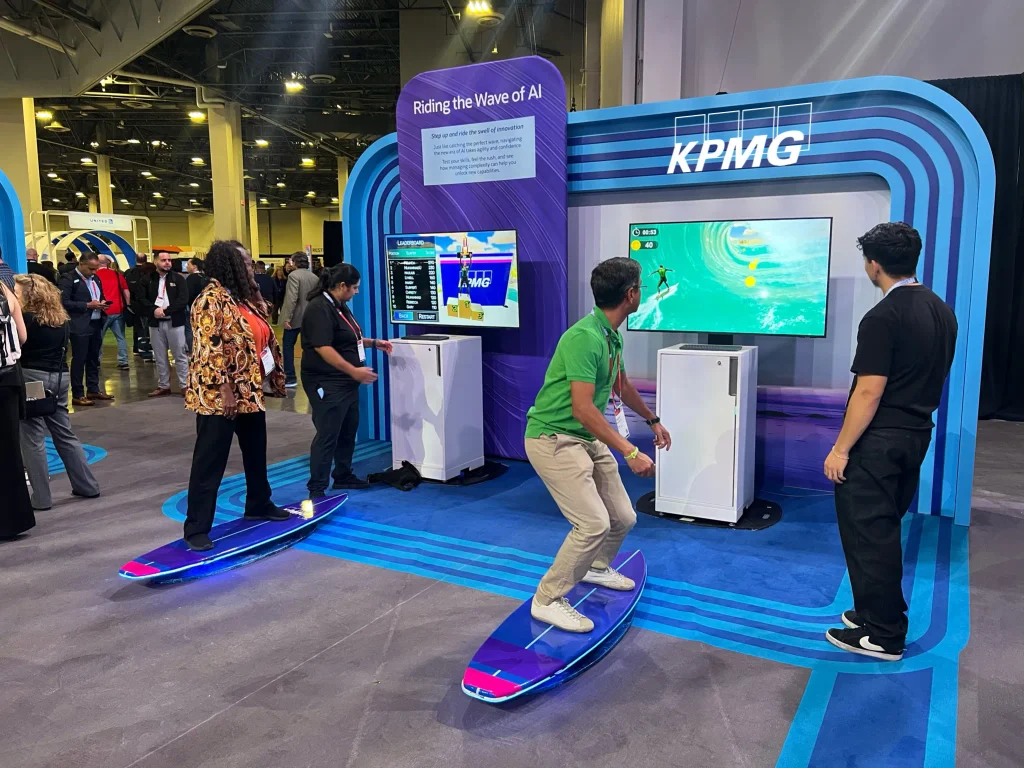
Session Run Time: 2-3 minutes
Space Required: 8 ft x 8 ft recommended play area
Capacity: 1 player at a time; approx. 30 participants per hour
For corporate parties, themed events, and other gatherings where planners want something more physical and visually engaging, the Surf Simulator can bring a different kind of energy to both indoor and outdoor entertainment plans.
6. VR 360 Simulator: Immersive Entertainment Beyond the Headset
The VR 360 Simulator combines virtual reality with physical movement, giving guests an experience that feels more immersive than simply putting on a headset. As the platform moves with the virtual content, the experience itself can also attract attention from guests watching nearby.
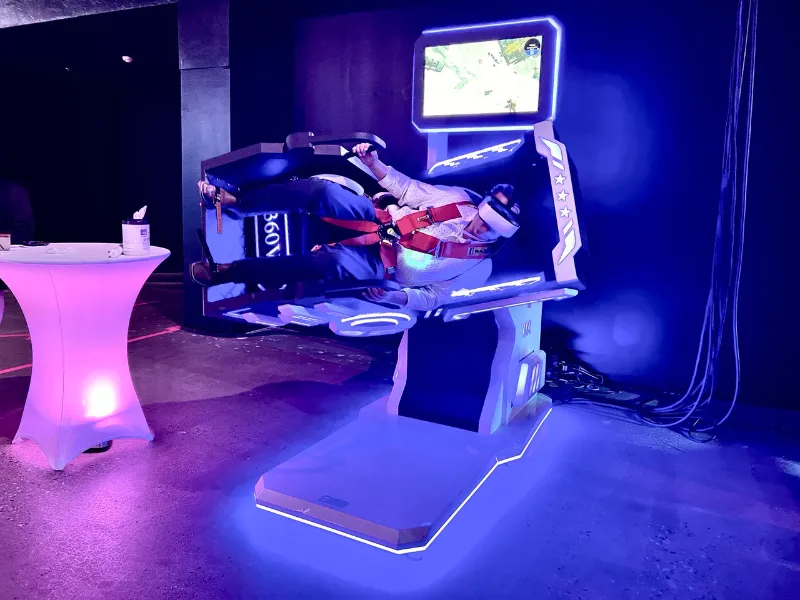
Session Run Time: 4-5 minutes
Space Required: 8 ft x 8 ft recommended play area
Capacity: 1 player at a time; approx. 15 participants per hour
Power: 1800W
For planners looking to add immersive technology to an event, the VR 360 Simulator can offer a memorable experience while also showing why venue conditions matter just as much as available space when choosing interactive entertainment.
Indoor vs. Outdoor Setup
A versatile activation gives planners more options, but versatility doesn’t mean every setup should be approached the same way. Small adjustments in placement and preparation can make the difference between an experience that simply fits the venue and one that feels like it belongs there. Use the comparison below as a quick planning reference for getting the most out of each experience in either setting.
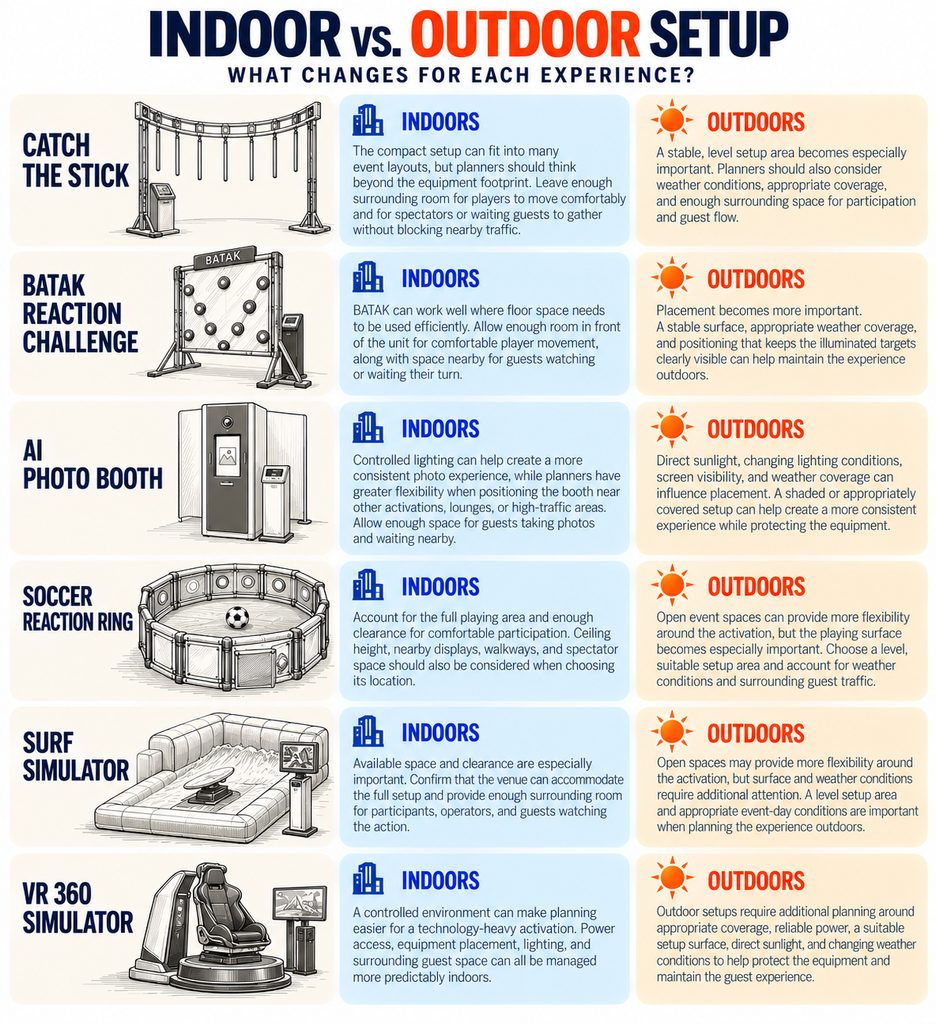
The best setup isn’t always about choosing indoor over outdoor. It’s about matching the experience to the venue and planning around how guests will actually use the space. When those details are considered early, planners have much more flexibility to build an entertainment mix that works with the event rather than around it.
When Indoors Has the Advantage
Flexibility is valuable, but not every event experience needs to work equally well in every environment. In some cases, choosing an indoor setup can give planners more control over the experience itself, particularly when technology, screens, detailed equipment, or longer guest interactions are involved.
A Racing Simulator, for example, benefits from an environment where lighting, power, equipment placement, and surrounding traffic can be managed more predictably. Guests can focus on the race while spectators gather around the screens, and planners can build competitions or fastest-lap challenges without having to account for changing outdoor conditions.
Indoor venues can also make sense when the entertainment is part of a trade show booth, conference, corporate meeting, or branded activation where the available footprint and guest journey are already clearly defined. In these settings, the goal isn’t necessarily to find the most flexible experience. It’s to choose one that makes the best use of the environment you already have.
The same thinking applies in reverse: an outdoor venue shouldn’t automatically mean choosing the largest activation available. The best event entertainment is the option that fits the space, audience, event format, and way guests are expected to participate.
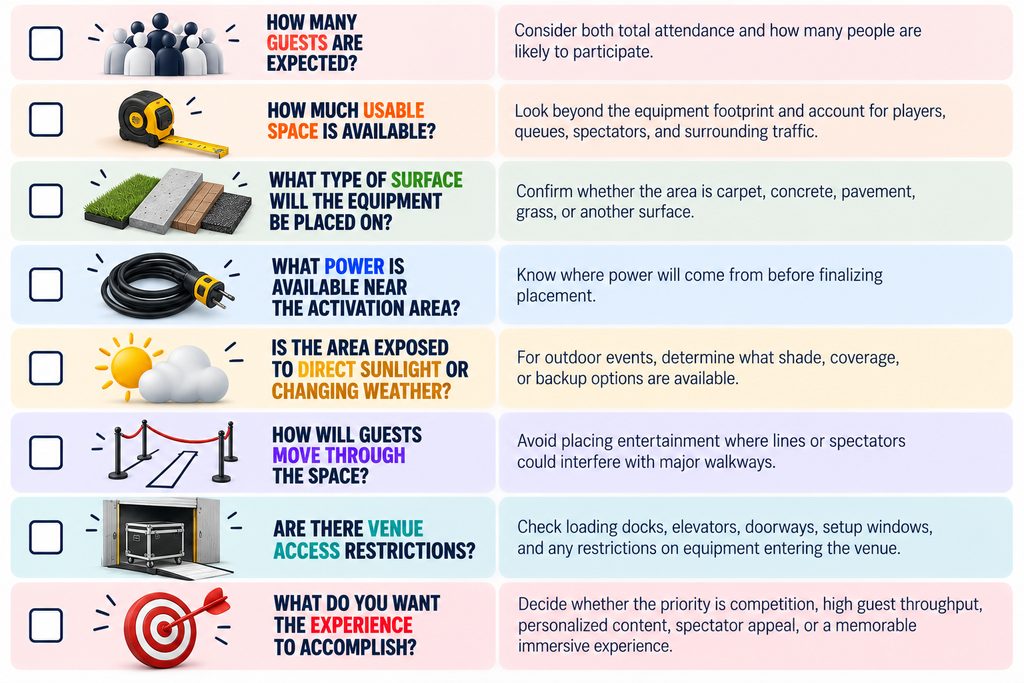
Before You Book: A Quick Planner Checklist
By the time you’re comparing specific entertainment options, a few venue and event details should already be clear. Answering these questions before booking can make it easier to narrow down the right experiences and avoid surprises during setup. The more clearly these questions are answered upfront, the easier it becomes to choose interactive event entertainment that fits both the venue and the way guests are expected to participate.
Your Event Entertainment Checklist
FAQs about Indoor & Outdoor Event Entertainment
Can interactive event entertainment be used outdoors?
Yes, many interactive experiences can be used at outdoor events, but suitability depends on the specific equipment and event conditions. Planners should consider weather, power access, surface conditions, direct sunlight, and appropriate coverage before finalizing an outdoor setup.
What entertainment works well for outdoor corporate events?
Experiences that encourage quick participation, competition, and spectator engagement can work especially well outdoors when conditions allow. Options such as Catch the Stick, BATAK Reaction Challenge, Soccer Reaction Ring, Surf Simulator, and AI Photo Booth can give planners a mix of physical, competitive, and personalized entertainment.
How much space should I allow for interactive event entertainment?
Start with the equipment footprint, but don’t stop there. The actual space needed should also account for players, operators, guests waiting their turn, spectators, and nearby walkways. Larger or more physical experiences generally require additional clearance around the activation.
What happens to outdoor event entertainment if it rains?
This depends on the equipment and severity of the weather. Outdoor events should have a weather plan established before event day, which may include appropriate coverage, relocating an activation to a suitable indoor area, delaying operation, or temporarily closing an experience when conditions aren’t safe for guests or equipment.
How do I choose entertainment for an indoor corporate event?
Consider your available space, guest count, venue restrictions, power access, desired level of participation, and the overall goal of the experience. For example, a planner focused on friendly competition may prioritize reaction games or simulators, while an event focused on personalized guest engagement may benefit from an AI Photo Booth.
Final Thoughts
Great event entertainment starts with more than choosing an activation that looks exciting. The strongest setups are the ones that make sense for the venue, the audience, and the way guests will actually experience the event.
Whether you’re planning an indoor corporate event, an outdoor celebration, a trade show, or a branded activation, thinking through the environment early gives you more freedom to choose experiences that fit naturally into the event. Sometimes that means prioritizing a compact, high-throughput challenge. Other times, it means making room for an immersive experience that becomes a focal point.
Los Virtuality offers interactive event entertainment for a wide range of indoor and outdoor events, with options that can be adapted around different spaces, guest counts, and event goals. Explore our corporate event entertainment options to find the right mix for your venue.