How to Keep Conference Attendees Engaged Between Sessions
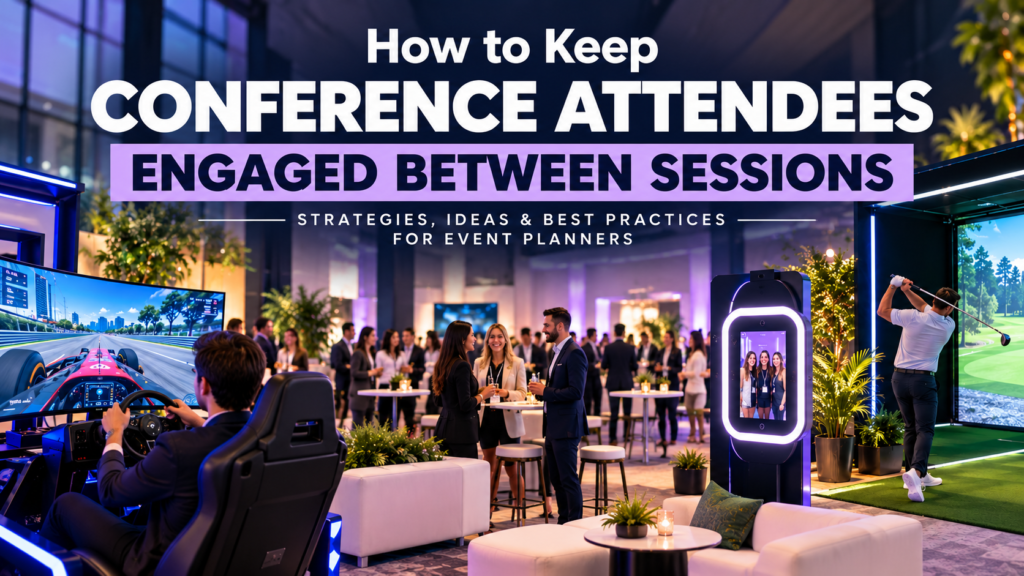
A conference can feature an impressive lineup of speakers, valuable industry insights, and a carefully planned agenda, but what happens when attendees step outside the presentation room? For conference organizers, keeping participants engaged between sessions can be just as challenging as capturing their attention during them. Long breaks, limited networking opportunities, and poorly utilized event spaces can leave attendees disconnected from the experience, even when the conference itself has plenty to offer.
Effective conference attendee engagement goes beyond delivering great presentations. It’s about creating an environment where attendees feel encouraged to connect, participate, and make the most of their time at the event. Meeting Professionals International (MPI) emphasizes the importance of incorporating meaningful breaks into conference schedules, allowing attendees opportunities to recharge, process information, and build valuable connections.
For event planners, this creates an opportunity to rethink how downtime is used. Instead of treating breaks as empty spaces between presentations, organizers can introduce thoughtful attendee engagement strategies that encourage interaction without overwhelming participants. From dedicated networking areas and interactive conference experiences to flexible spaces designed for informal conversations, even small adjustments can make a noticeable difference.
The goal isn’t to keep attendees constantly entertained; it’s to create a conference environment where every part of the experience feels intentional. With the right planning, those moments between sessions can become some of the most valuable opportunities for connection, participation, and lasting engagement. From maximizing conference breaks and designing purposeful engagement spaces to balancing event flow and measuring participation, this guide explores practical ways to turn the time between sessions into a meaningful part of the attendee experience.
Table of Contents
Why Conference Attendee Engagement Matters Between Sessions
When planning a conference, it’s easy to focus most of the attention on keynote speakers, breakout sessions, and educational programming. While these elements are essential, they represent only part of the attendee experience. The time spent moving between sessions, exploring event spaces, and interacting with other participants can significantly influence how attendees perceive the overall value of a conference.
For many professionals, attending a conference is about more than gaining industry knowledge. It’s an opportunity to build relationships, exchange ideas, discover new solutions, and connect with people they might not otherwise meet. When these opportunities are limited, attendees may leave with valuable information but fewer meaningful connections.
Thoughtful attendee engagement strategies can help conference organizers create an environment where participation extends beyond the presentation room. By providing opportunities for informal interaction, hands-on experiences, and spontaneous conversations, planners can encourage attendees to become active participants rather than passive observers.
The Connection Between Engagement and Attendee Satisfaction
A successful conference should leave attendees feeling that their time was well spent. While informative sessions contribute to that experience, opportunities for connection, exploration, and personal interaction can make an event feel more rewarding.
Consider two attendees who participate in the same educational sessions. One spends every break waiting for the next presentation, while the other has opportunities to meet industry peers, explore relevant exhibits, and participate in engaging activities. Although both receive the same educational content, their overall conference experiences may feel very different.
This is why conference engagement ideas should be considered during the early stages of event planning rather than treated as last-minute additions. When engagement opportunities are intentionally integrated into the conference environment, organizers can create a more welcoming, interactive experience that supports networking, encourages participation, and gives attendees additional reasons to stay involved throughout the event. Ultimately, the value of a conference isn’t measured solely by the information presented. It’s also reflected in the connections attendees make, the experiences they participate in, and the opportunities they discover along the way.
Make the Most of Conference Breaks Without Overloading Attendees
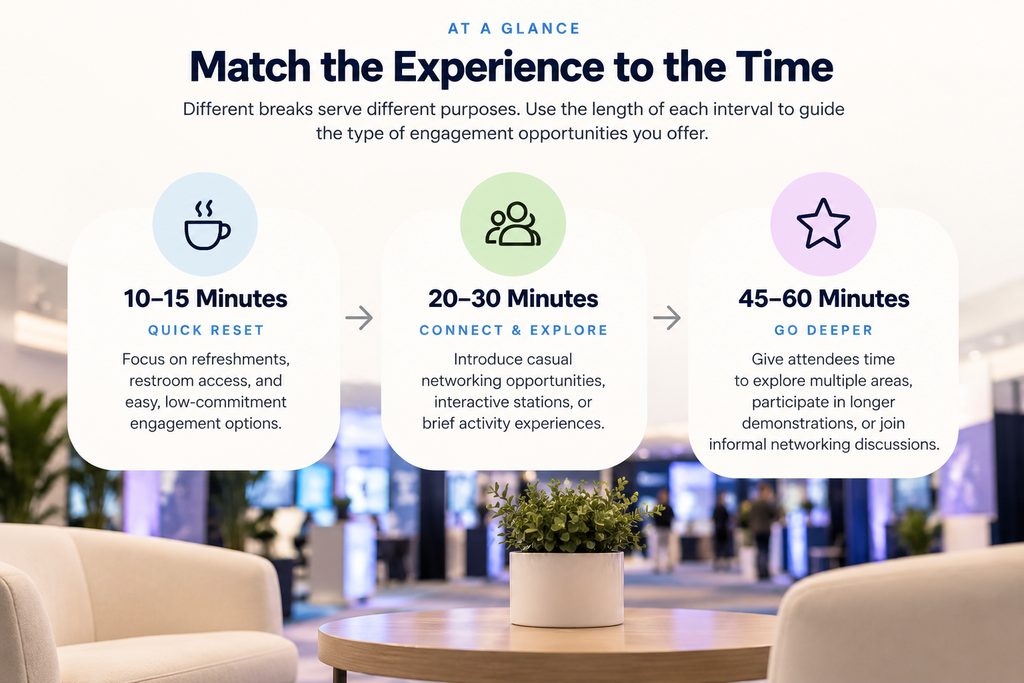
Conference breaks aren’t one-size-fits-all. A quick 15-minute pause between presentations serves a very different purpose than an hour-long networking break. For event planners, understanding these differences is essential when deciding which activities to introduce, how much time to allocate, and where attendees are likely to gather. The goal is to make each break useful without creating unnecessary pressure to participate.
Plan Activities Around the Time Available
One of the simplest ways to improve conference attendee engagement is to match activities to the length of each break. Short intervals are generally better suited for refreshments, quick conversations, and experiences that require little commitment. Longer breaks allow more flexibility for interactive challenges, exhibitor demonstrations, and organized networking opportunities.
For planners looking to introduce quick, engaging activities, experiences like Racing Simulators, AI Photo Booths, and Golf Simulators offer opportunities for attendees to participate without committing to lengthy activities. From a quick virtual race or golf challenge to a personalized AI-generated photo, these experiences can be adapted to shorter participation windows while encouraging friendly competition and interaction.
Give Attendees Options, Not Obligations
Not every conference attendee will want to spend their break the same way, and that’s something planners should embrace. While some participants may gravitate toward interactive challenges or networking opportunities, others might prefer a quiet space to catch up on emails, recharge, or reflect on what they’ve learned. Providing a variety of options allows attendees to make the most of their downtime based on their individual preferences.
One practical approach is to create a mix of active and relaxed environments throughout the venue. For example, interactive stations can be positioned near high-traffic areas, while comfortable seating and quieter spaces can offer a welcome escape from the excitement. Clear signage can also help attendees quickly identify available activities without spending valuable break time searching for them.
Create Purposeful Engagement Zones That Encourage Interaction
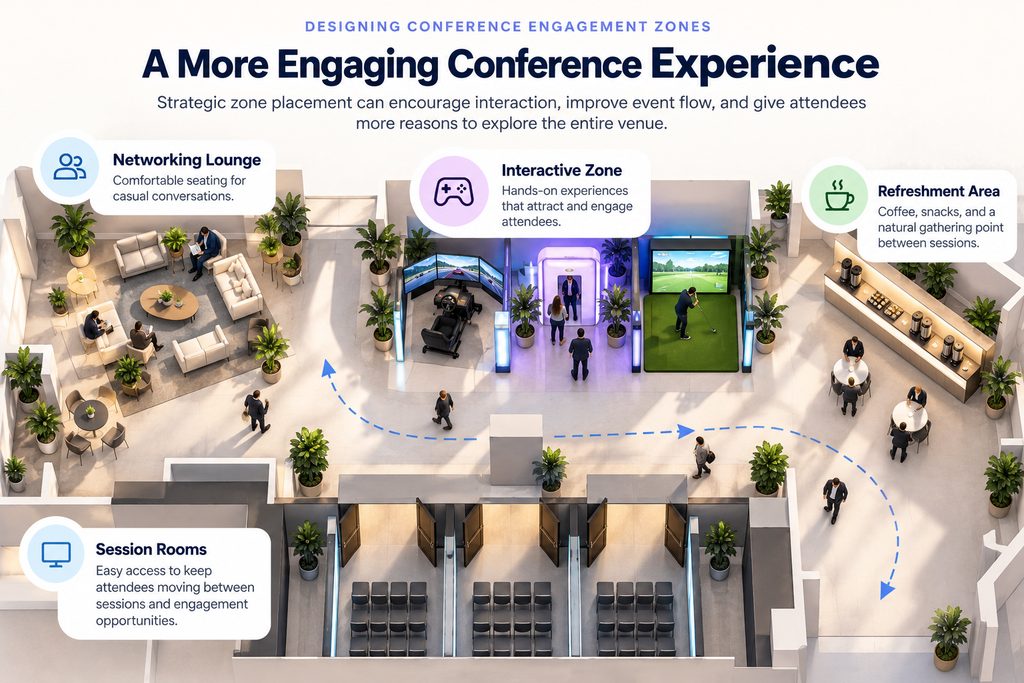
The layout of a conference venue can influence how attendees interact with their surroundings. Rather than concentrating every activity in one location, event planners can strategically organize networking spaces, interactive stations, and refreshment areas to encourage exploration throughout the venue. Well-designed engagement zones should serve a clear purpose while remaining easy to discover and access. When these spaces work together, attendees can move naturally between conversations, activities, and scheduled sessions without feeling disconnected from the event.
Design Spaces That Make Networking Feel Natural
Meaningful networking doesn’t always happen during scheduled meet-and-greets. Sometimes, the most valuable conversations begin while grabbing coffee, exploring an exhibit, or waiting to participate in an activity. Planners can encourage these interactions by incorporating comfortable seating clusters, standing tables, and informal gathering areas near popular conference spaces. Positioning interactive experiences nearby can also create natural conversation starters, giving attendees something to connect over beyond their professional introductions.
Make Interactive Spaces Easy to Discover
Even the most engaging conference activities can go unnoticed if they’re difficult to find. Positioning interactive stations near exhibition areas, main walkways, or other high-visibility locations can encourage attendees to explore experiences they might otherwise overlook.
Consider using clear directional signage, visible activity displays, and open layouts that allow attendees to see what’s happening before deciding to participate. These small design decisions can make interactive conference experiences feel more approachable while helping organizers make better use of available event space. Effective engagement zones aren’t about filling every corner of a venue. They’re about creating intentional spaces that support connection, discovery, and participation throughout the conference.
Balance Interactive Experiences With Conference Flow
An interactive activation might attract a crowd, but if it creates long lines, blocks walkways, or disrupts nearby presentations, it can quickly become a logistical challenge. For conference organizers, successful attendee engagement strategies require balancing participation with the practical demands of a busy event schedule.
Before finalizing activity placements, planners should evaluate how attendees will move throughout the venue, where congestion is most likely to occur, and whether each experience can accommodate the expected number of participants.
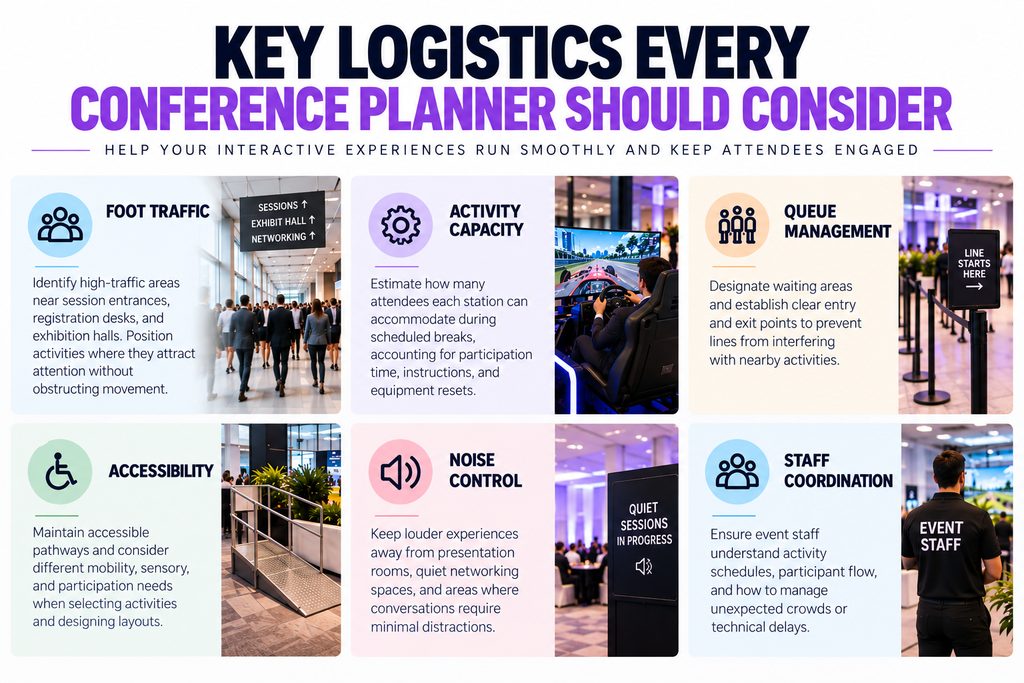
Planning Tip: Estimate Activity Capacity Before the Event
Consider a conference with a 30-minute networking break and an interactive station that accommodates one participant every three minutes. Under ideal conditions, that station could serve approximately 10 participants during the break.
However, real-world participation may be lower once instructions, transitions, and equipment adjustments are considered. Testing activities beforehand and confirming realistic throughput with vendors can help planners determine whether additional stations or alternative participation options are necessary.
For a deeper look at estimating activity capacity, explore our guide: 500 Guests, 3 Hours: How Much Interactive Entertainment Do You Need?
How to Measure Conference Attendee Engagement
Creating opportunities for interaction is only part of a successful conference strategy. Understanding how attendees respond to those opportunities can help planners identify what worked, where improvements are needed, and which experiences delivered the most value.
While attendance numbers provide a general picture of event participation, they don’t necessarily reveal how actively attendees engaged. Measuring conference attendee engagement requires looking at specific behaviors, participation patterns, and attendee feedback throughout the event.
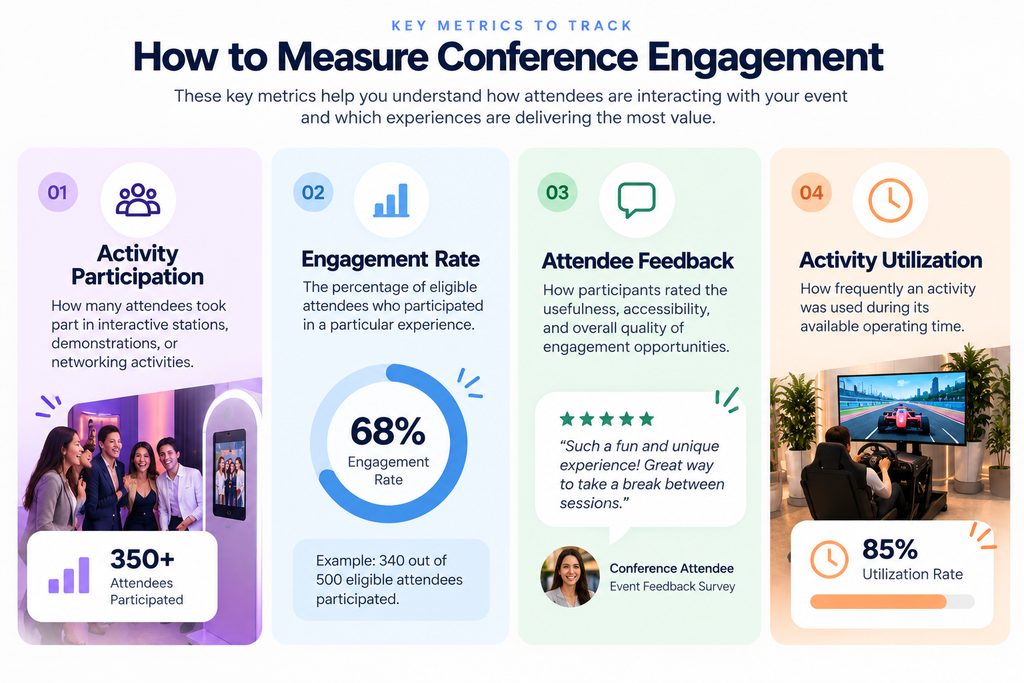
Turn Engagement Data Into Better Event Decisions
Collecting engagement data is only valuable when it leads to better planning decisions. For example, an interactive station with consistently long lines may indicate strong attendee interest but insufficient capacity, while an activity with low participation could suggest that its location, timing, or visibility needs improvement. Comparing these patterns can help organizers identify where adjustments would have the greatest impact.
Post-event surveys can provide additional context by revealing which experiences attendees found most valuable and what they felt was missing. Combining this feedback with participation data allows planners to make more informed decisions about future event layouts, activity selection, and resource allocation.
Frequently Asked Questions About Conference Attendee Engagement
How do you keep conference attendees engaged between sessions?
Keeping attendees engaged between sessions starts with offering opportunities that complement the conference schedule. Interactive stations, informal networking areas, and hands-on demonstrations can encourage participation without requiring lengthy commitments. The key is providing accessible activities that attendees can enjoy at their own pace.
What are some effective conference engagement ideas?
Effective conference engagement ideas include interactive challenges, networking lounges, branded photo experiences, and exhibitor demonstrations. The best options depend on your audience, available space, and event objectives. Combining opportunities for social interaction with hands-on participation can help create a more dynamic conference environment.
How long should conference breaks be?
Conference break lengths depend on the event schedule, venue size, and planned activities. Short breaks of 10–15 minutes may be sufficient for refreshments and quick conversations, while 30–60-minute intervals can provide more flexibility for networking and interactive experiences. Planners should also account for travel time between session rooms.
How can event planners measure attendee engagement?
Event planners can measure conference attendee engagement by tracking activity participation, engagement rates, attendee feedback, and station utilization. Post-event surveys and participation data can help organizers understand which experiences resonated with attendees and identify opportunities to improve future conferences.
What types of interactive experiences work best at conferences?
Experiences that are easy to understand, accessible, and adaptable to different participation times often work well in conference environments. Racing simulators, golf challenges, and AI photo booths can provide opportunities for friendly competition and personalized interaction. The ideal choice depends on attendee interests, available space, and how much time participants have between sessions.
Final Thoughts
A successful conference is about more than delivering valuable presentations. It’s about creating an environment where attendees feel connected, inspired, and encouraged to participate throughout the entire experience. Sometimes, the conversations sparked over coffee or the excitement of an unexpected interactive challenge can be just as memorable as the sessions themselves.
For conference planners, improving conference attendee engagement doesn’t mean filling every available moment with entertainment. It means making thoughtful decisions about how attendees spend their time, interact with their surroundings, and connect with one another. When these elements come together, even the moments between sessions can contribute to a more rewarding and memorable event.
We understand that every conference has different goals, audiences, and engagement needs. Whether you’re looking to encourage friendly competition, create memorable networking moments, or introduce something unexpected between sessions, the right interactive experiences can make a difference. Explore our interactive event experiences to discover options that complement your conference and help bring your event vision to life.