25 Trade Show Booth Ideas That Draw Real Crowds – 2026 Guide
Your Booth Has Seconds to Win Attention…
Trade show attendees aren’t walking the floor looking for reasons to stop at every booth. They’re navigating crowded aisles, checking schedules, talking with colleagues, looking for specific vendors, and being hit with competing messages from every direction. An exhibitor may have only a few seconds to interrupt that routine and earn someone’s attention. That’s why a beautifully designed booth isn’t automatically an engaging booth.
Research from IAEE and the Center for Exhibition Industry Research (CEIR) examines how in-booth activities, attendee interaction, product engagement, and other strategies contribute to exhibitor goals. Freeman’s event research states: 96% of attendees say it’s easier to advocate for a product or service after participating in hands-on activities at an event. That gives exhibitors a bigger reason to think beyond traditional signage and giveaways and consider interactive trade show booth ideas that get attendees actively involved.
Movement, competition, live participation, bold visuals, and visible technology can all create the initial interruption. Even something as simple as watching another attendee attempt a challenge can generate curiosity because there’s an outcome to watch. When attendees see others gathered around an experience, competing, laughing, taking photos, or watching a leaderboard, the booth begins generating its own momentum. Instead of your team constantly trying to pull people in from the aisle, the activity itself becomes part of the attraction.
Below, we’re breaking down 25 trade show booth ideas for 2026, along with the strategy behind attracting attendees, keeping them engaged, turning booth traffic into leads, and planning an experience that works within the realities of a live trade show floor.
Table of Contents
25 Interactive Ideas to Engage Attendees
1. AI Photobooth
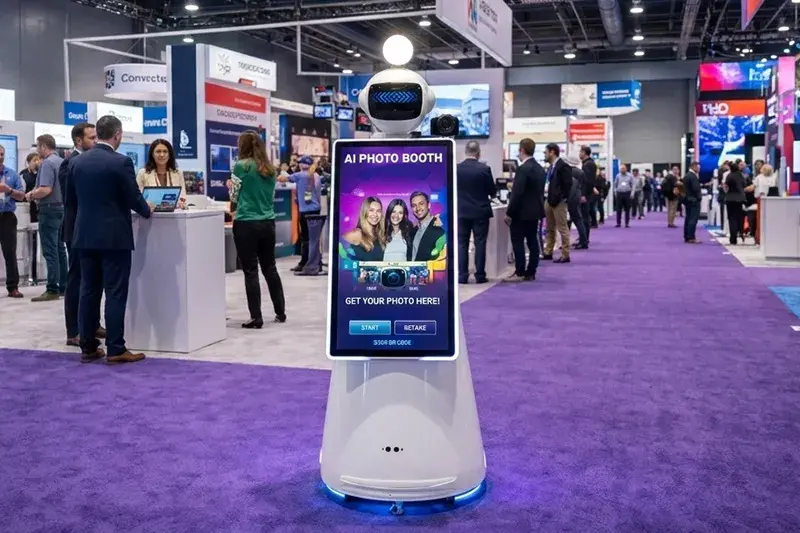
Turn a standard booth photo into something attendees can make their own. Our AI Photo Booth creates personalized, AI-generated images that can be customized around a campaign or event theme, giving guests a branded takeaway beyond the booth.
Session Run Time: 2-3 minutes
Space Required: 4 ft x 4 ft recommended play area
Capacity: 3 players at a time; approx. 90 participants per hour
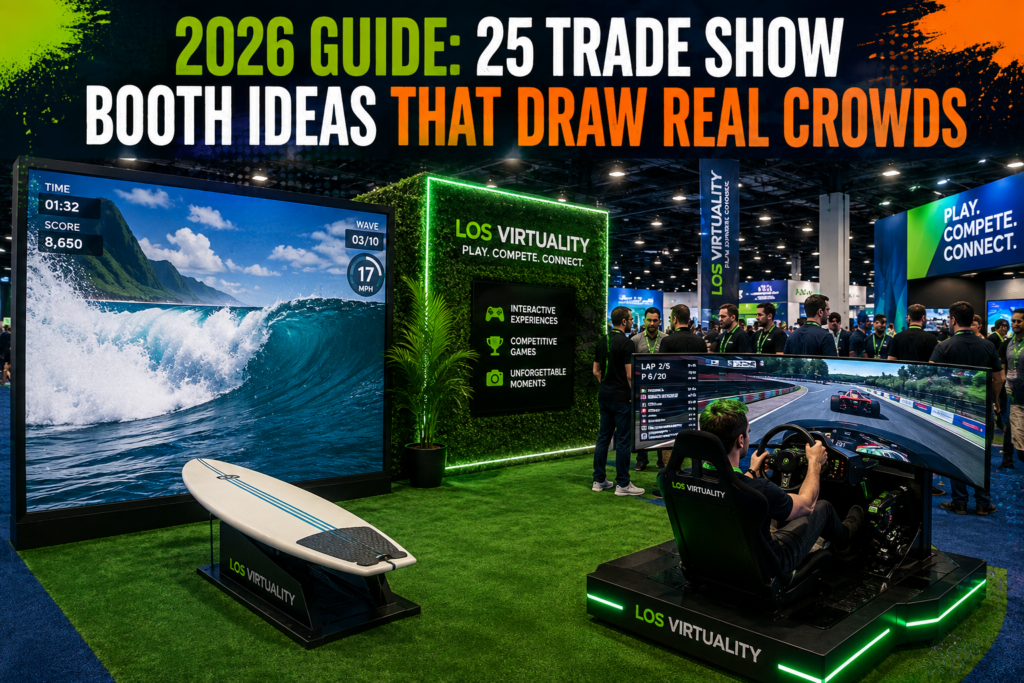
2. Surf Simulator
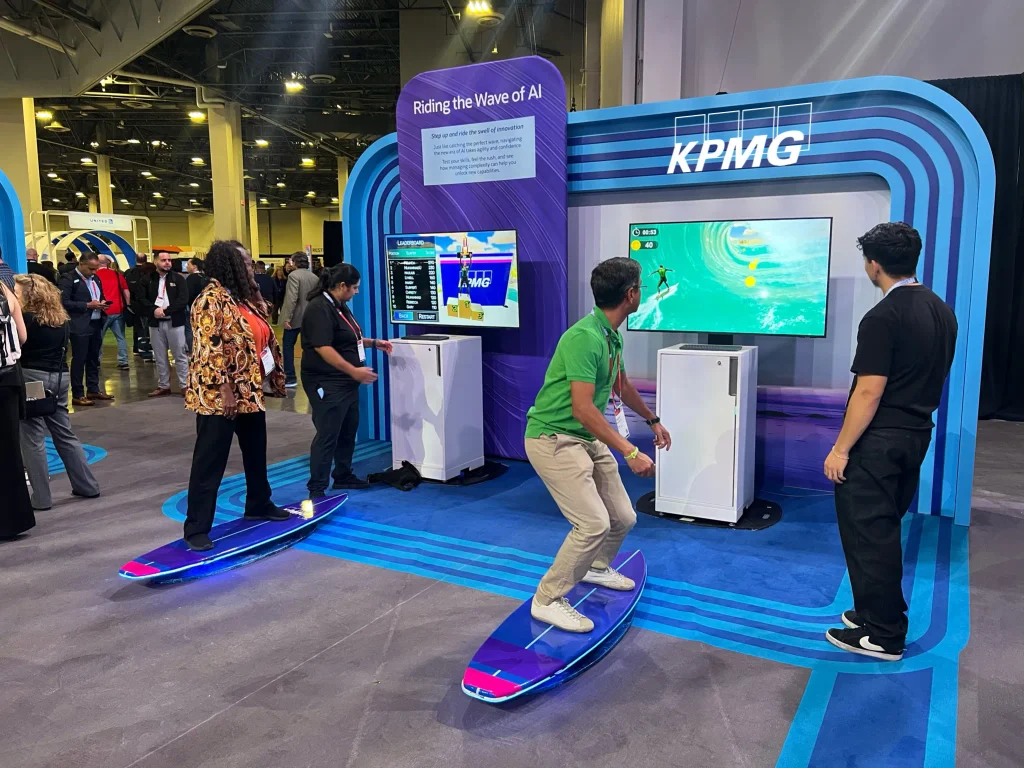
Bring movement straight to the show floor with a challenge attendees can understand from the aisle. Guests step onto the board and test their balance while the screen brings the ride to life, giving spectators plenty to watch too.
Session Run Time: 2-3 minutes
Space Required: 8 ft x 8 ft recommended play area
Capacity: 1 player at a time; approx. 30 participants per hour
3. Golf Simulator
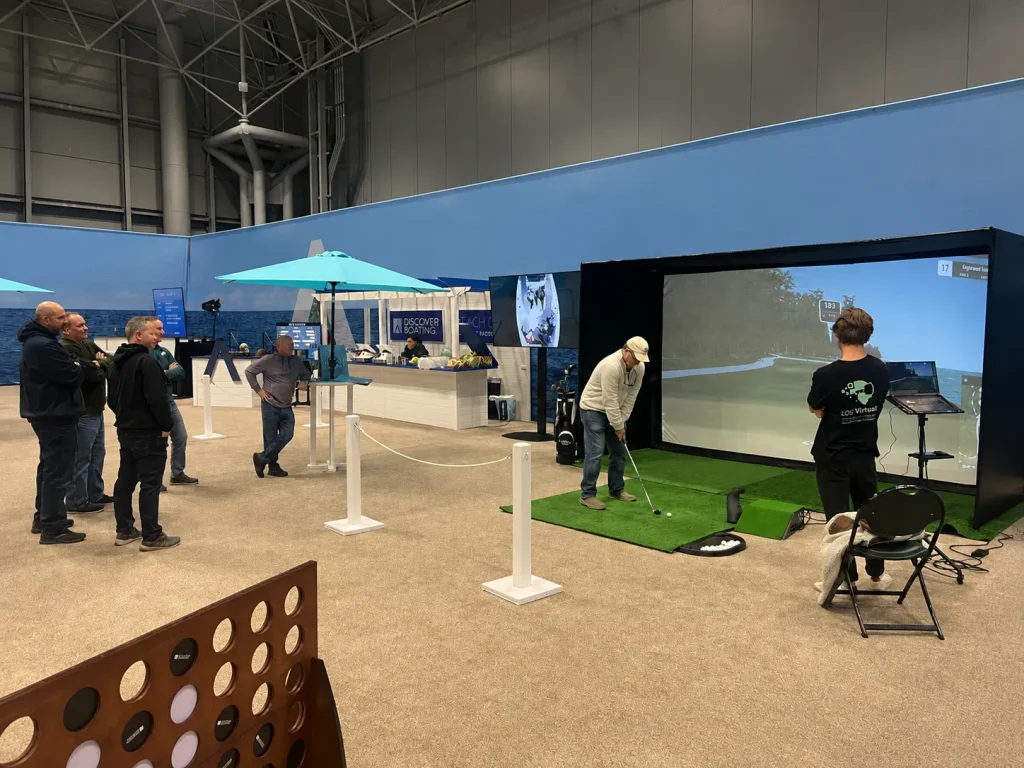
Give attendees a reason to take a swing, compare results, and challenge coworkers with a golf experience built for friendly competition. A closest-to-the-pin or accuracy challenge keeps the action easy to follow while opening the door for booth conversations between turns.
Session Run Time: 3-4 minutes
Space Required: 14 ft x 10 ft recommended play area
Capacity: 1 player at a time; approx. 20 participants per hour
4. Soccer Simulator
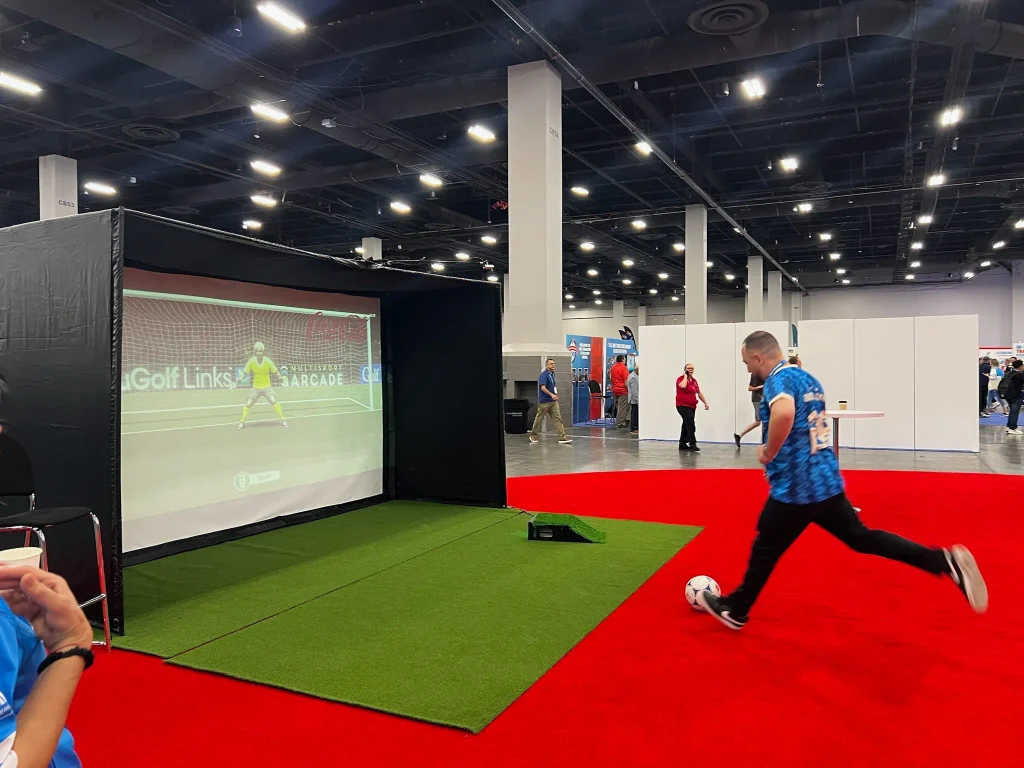
Turn soccer into a quick booth challenge where attendees can step up, take their shot, and see how they perform. The familiar environment makes participation easy to understand while giving coworkers and spectators something to follow from outside the play area.
Session Run Time: 3-4 minutes
Space Required: 14 ft x 10 ft recommended play area
Capacity: 1 player at a time; approx. 20 participants per hour
5. Soccer Bench Game (Undertable Foot Soccer)
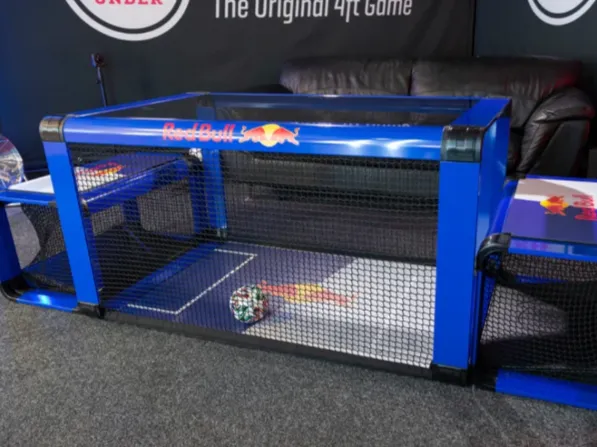
Put a different spin on soccer with a seated, head-to-head challenge played entirely under the table. Two attendees compete at once using their feet, making it an easy way to spark friendly competition without a large simulator setup.
Session Run Time: 3-4 minutes
Space Required: 6 ft x 4 ft recommended play area
Capacity: 2 players at a time; approx. 40 participants per hour
6. F1 Racing Simulator
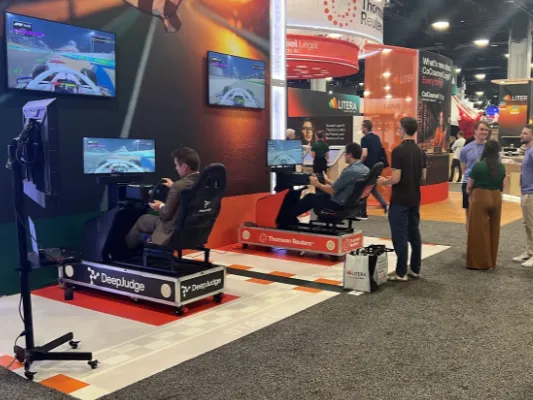
Few things make competition as instantly recognizable as a race. Attendees take the driver’s seat, chase their best time, and give coworkers a score to beat, while the on-screen action gives spectators a reason to stop and watch.
Session Run Time: 2-3 minutes
Space Required: 8 ft x 5 ft recommended play area
Capacity: 1 player at a time; approx. 30 participants per hour
7. VR Golf
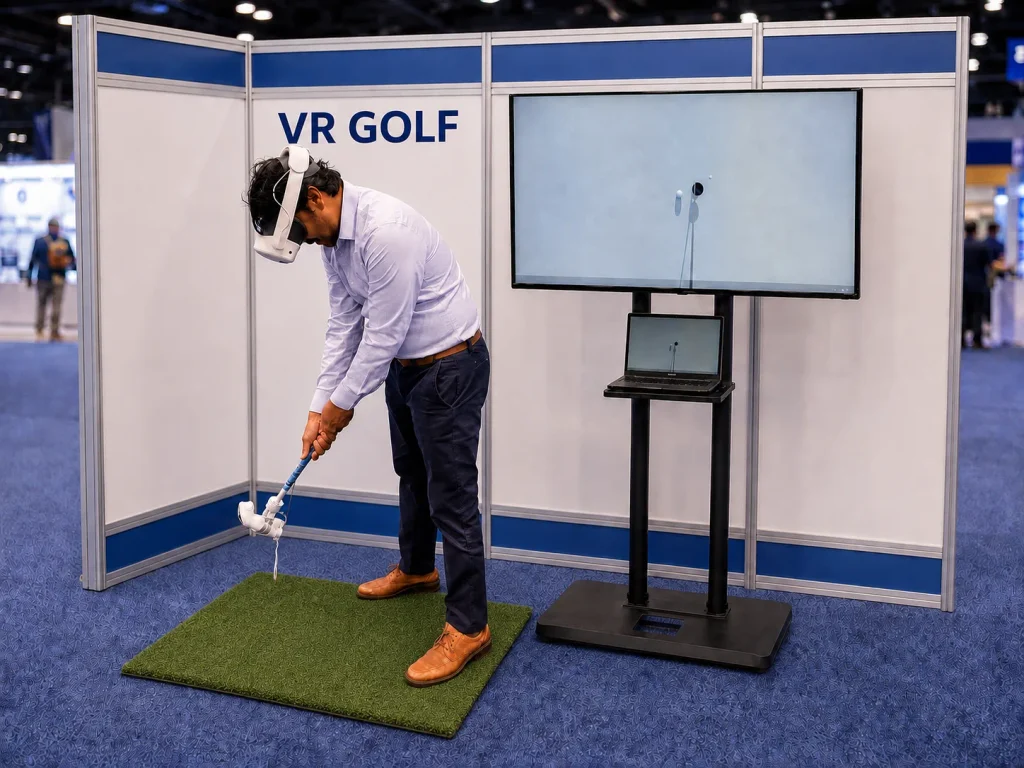
VR Golf brings the swing into a compact virtual setup, letting attendees step into the experience without building a traditional course inside the booth. It works well as a quick individual challenge while nearby guests can follow the action and wait for their turn.
Session Run Time: 4-5 minutes
Space Required: 7 ft x 7 ft recommended play area
Power: 110V
8. Soccer Reaction Ring
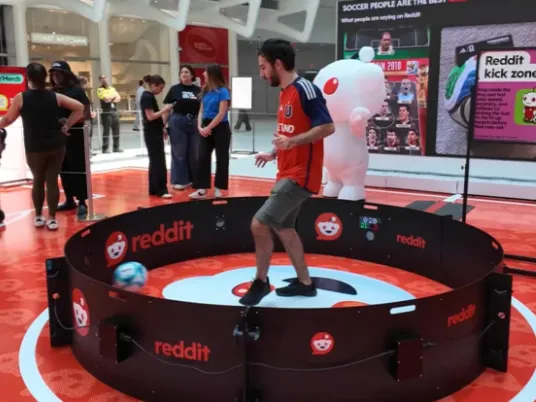
Make speed and reaction time part of the soccer challenge. Inside the Soccer Reaction Ring, attendees respond to fast-moving prompts and try to beat the clock, creating a gameplay that’s easy for the next competitor to understand just by watching. Quick rounds keep challengers rotating!
Session Run Time: 2-3 minutes
Space Required: 8.2 ft diameter recommended play area
Capacity: 1 player at a time; approx. 40 participants per hour
9. Mini Golf
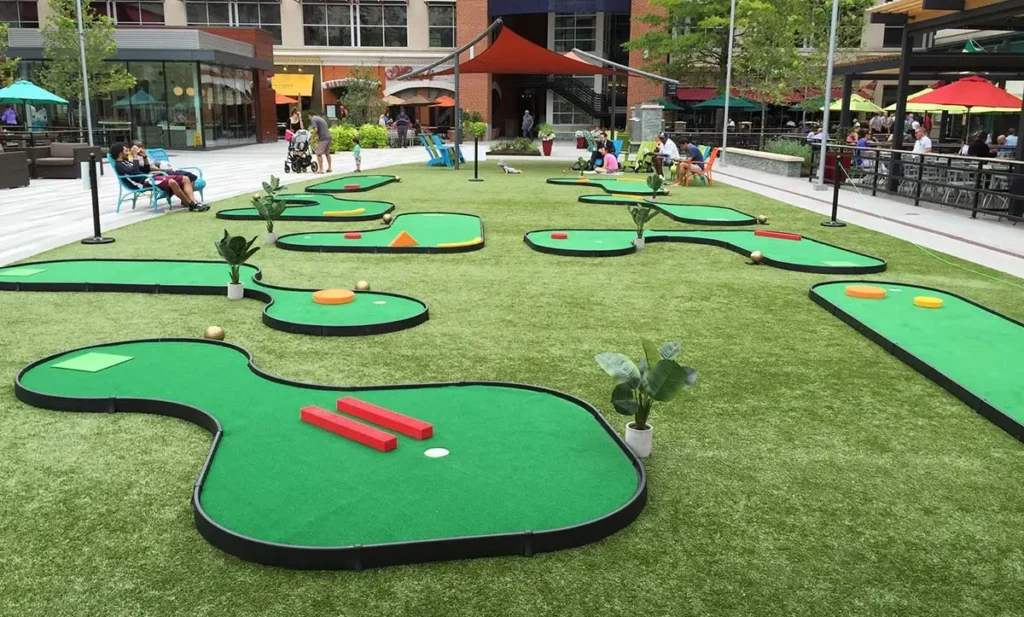
Mini Golf gives attendees a familiar challenge they can jump into with almost no explanation: line up the shot, putt, and see how they do. This experience creates steady activity while leaving room for conversation.
Session Run Time: 15-20 minutes
Space Required: 8 ft x 4 ft recommended play area
Capacity: 4 players at a time; approx. 16 participants per hour
10. Pit Stop Challenge VR
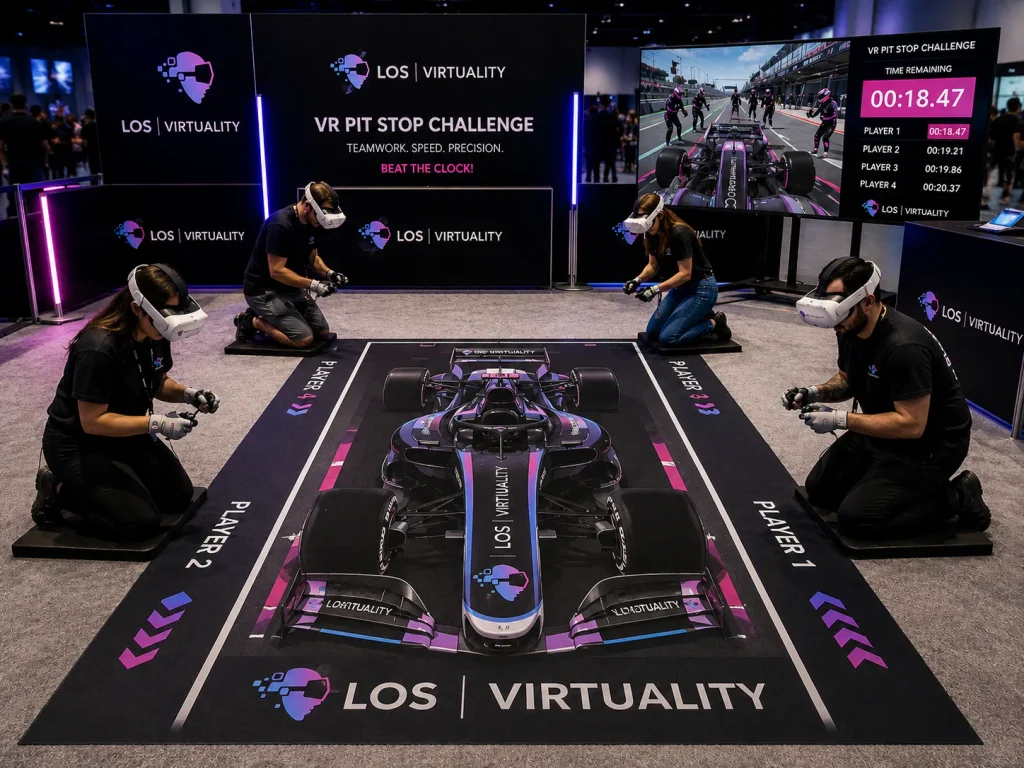
Instead of simply watching a race, put attendees in the pit crew. Pit Stop Challenge VR turns the pressure of a racing pit stop into a hands-on virtual challenge where guests can compete on speed and execution.
Session Run Time: 4-5 minutes
Space Required: 8 ft x 6 ft recommended play area
Capacity: 2 players at a time; approx. 30 participants per hour
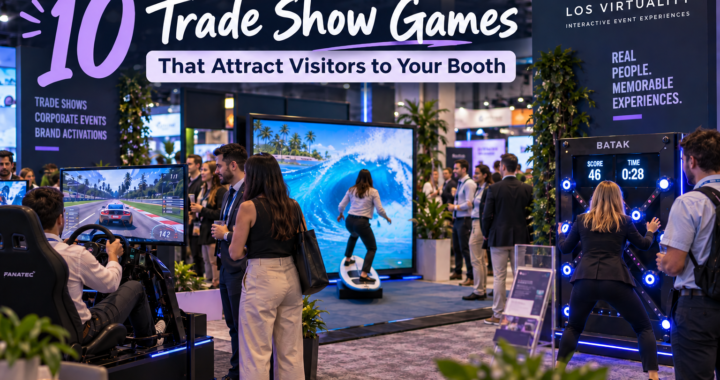
11. BATAK Reaction Challenge
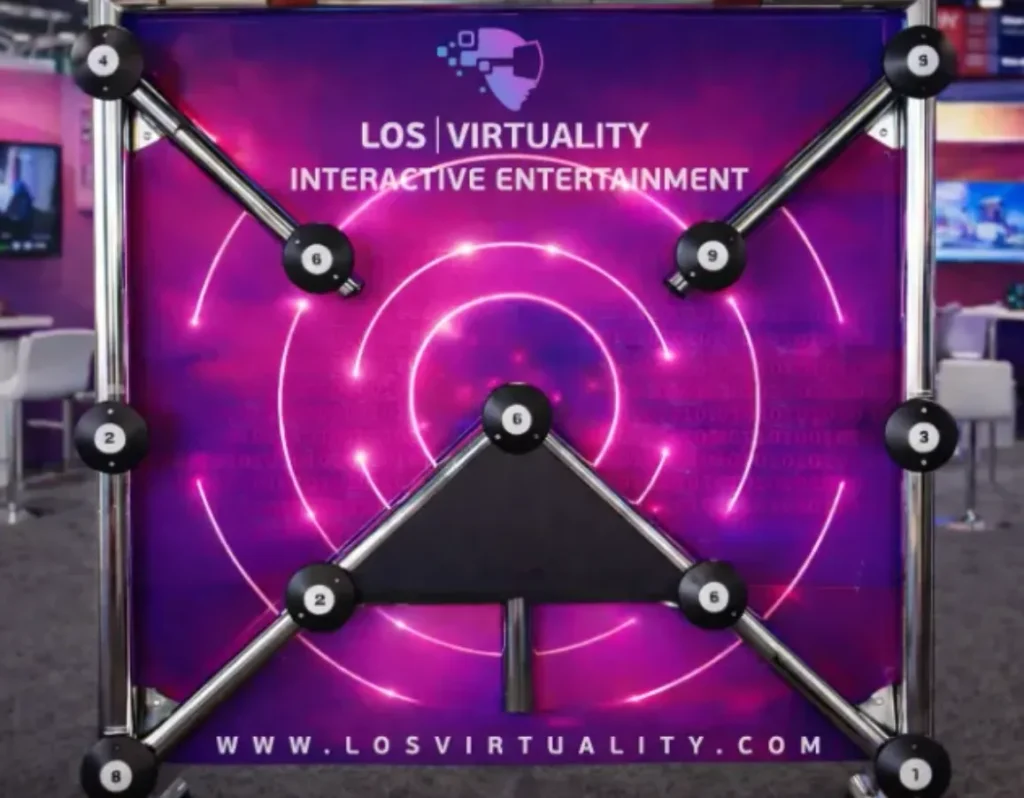
BATAK turns reaction speed into a challenge people can understand in seconds. Attendees race to hit illuminated targets as quickly as possible, making each attempt short, score-driven, and easy for spectators to follow before taking their own turn.
Session Run Time: 1-2 minutes
Space Required: 6 ft x 6 ft recommended play area
Capacity: 1 player at a time; approx. 40 participants per hour
12. Catch the Sticks Reaction Challenge
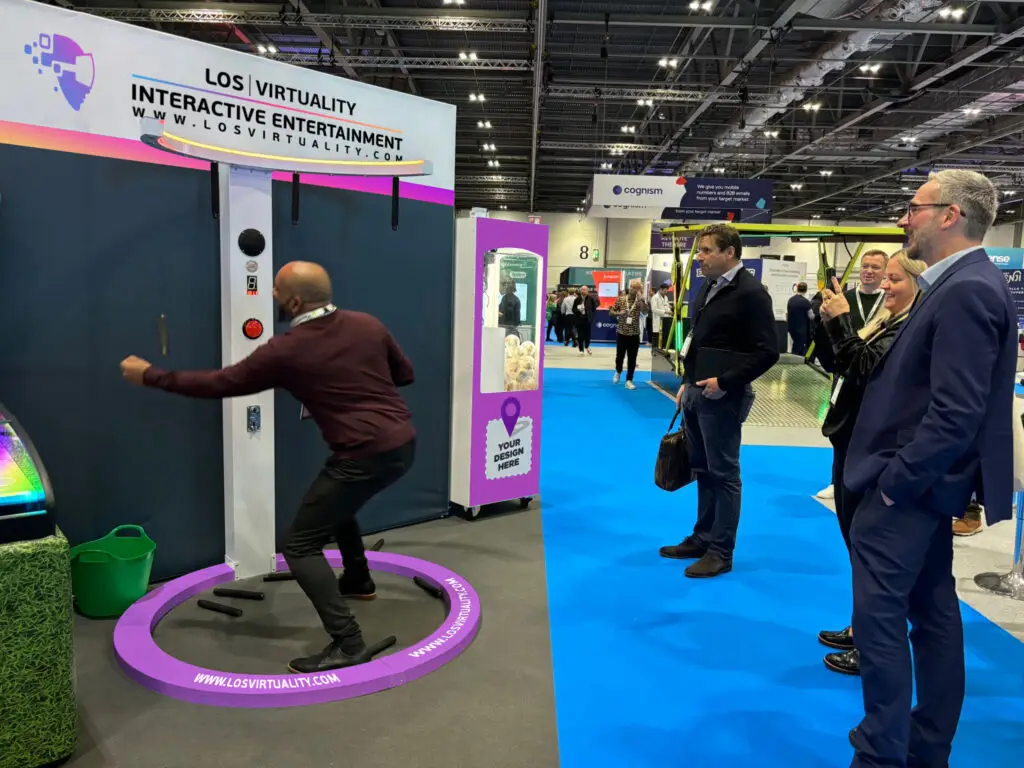
This experience creates suspense before the participant even moves. Guests watch for falling sticks and react fast enough to grab them before they drop. Short attempts make it easy to challenge a coworker and keep the next person moving into position.
Session Run Time: 1-2 minutes
Space Required: 5 ft x 5 ft recommended play area
Capacity: 1 player at a time; approx. 40 participants per hour
13. Flight Simulator
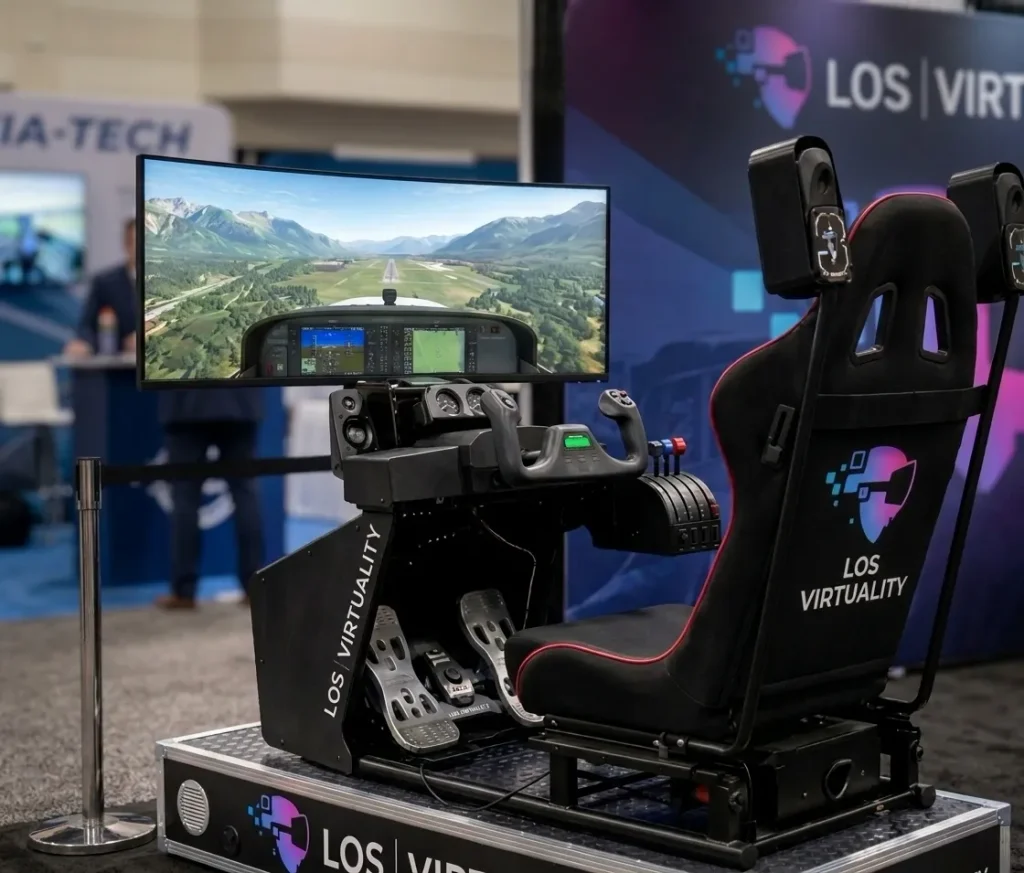
Give attendees the controls and let them experience the pressure of piloting for themselves. The Flight Simulator creates an immersive individual challenge while the screen makes the action visible to people nearby, helping the experience work beyond the person in the seat.
Session Run Time: 4-5 minutes
Space Required: 6 ft x 4 ft recommended play area
Capacity: 1 player at a time; approx. 15 participants per hour
Power: 110V
14. 360 VR Simulator
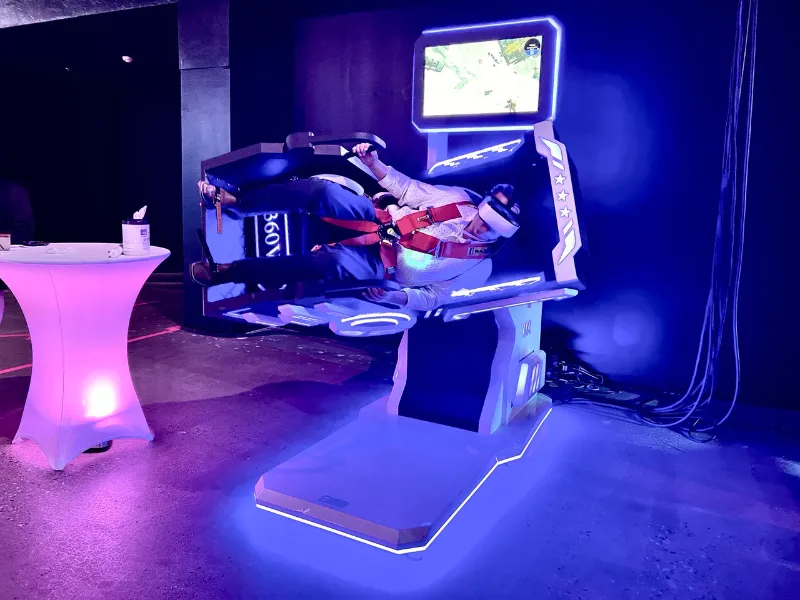
The 360 VR Simulator makes the physical experience part of the attraction. Guests enter a motion-enabled VR setup designed to add movement to the virtual environment, while the simulator itself gives passersby something visually different to notice.
Session Run Time: 4-5 minutes
Space Required: 8 ft x 8 ft recommended play area
Capacity: 1 player at a time; approx. 15 participants per hour
Power: 1800W
15. Robo Sketch
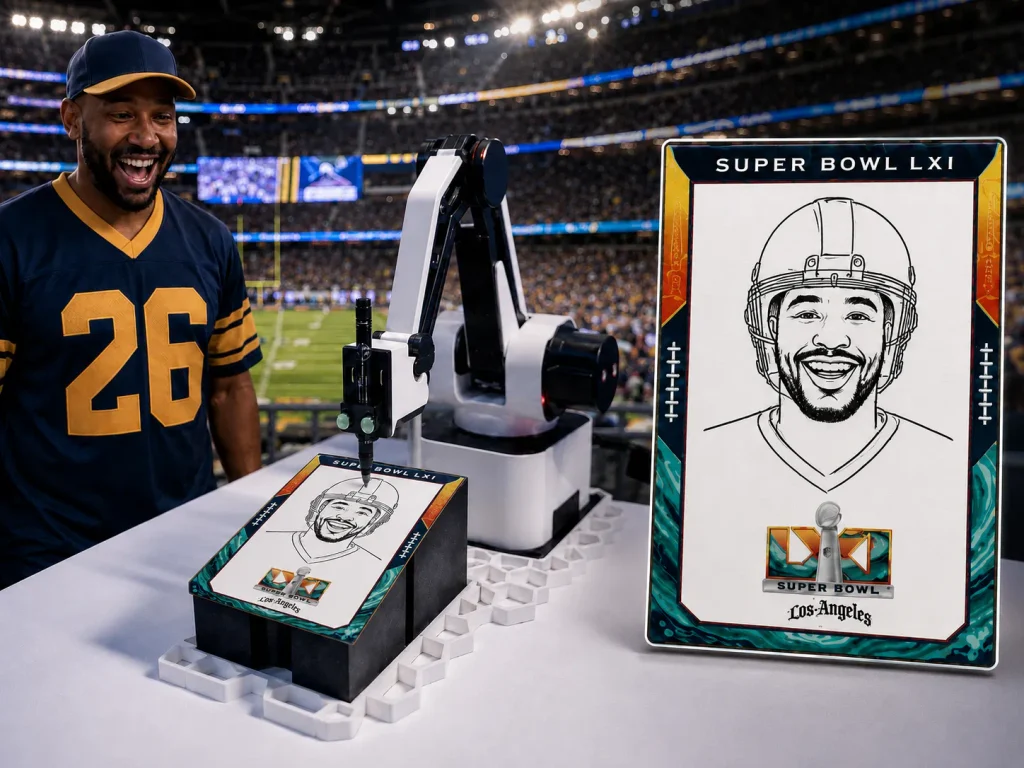
Robo Sketch gives attendees two things to experience: watching the technology work and receiving the finished sketch. That visible creation process can hold attention beyond the person being drawn, while the final portrait becomes a takeaway from the interaction.
Session Run Time: 4-5 minutes
Space Required: 5 ft x 5 ft recommended play area
Capacity: 1 player at a time; approx. 15 participants per hour
16. Home Run Derby (VR Baseball Simulator)

Turn the booth into a virtual ballpark with a Home Run Derby challenge attendees can step into and immediately understand. Guests swing for the fences in VR, compare performances, and give the next batter something to beat.
Session Run Time: 3-4 minutes
Space Required: 7 ft x 7 ft recommended play area
Capacity: 1 player at a time; approx. 20 participants per hour
Power: 110V
17. Walk the Plank VR
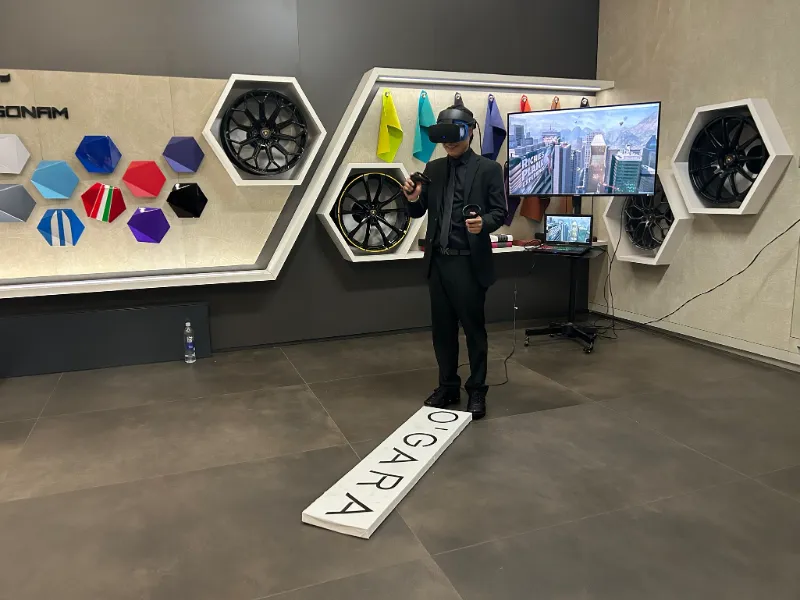
Walk the Plank VR turns a simple decision into the entertainment: will the attendee actually step forward? The virtual height challenge creates reactions that can be just as entertaining for coworkers watching as for the person inside the headset.
Session Run Time: 2-3 minutes
Space Required: 7 ft x 7 ft recommended play area
Capacity: 1 player at a time; approx. 24 participants per hour
Power: 110V
18. Rowing Simulator VR
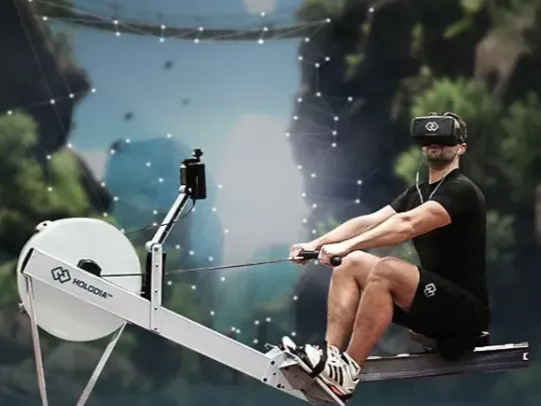
VR Rowing transforms a familiar athletic motion into an immersive challenge, giving attendees a more active way to experience virtual reality than simply standing in a headset. The physical movement also makes the participant easy for nearby guests to notice.
Session Run Time: 3-4 minutes
Space Required: 7 ft x 7 ft recommended play area
Capacity: 1 player at a time; approx. 20 participants per hour
Power: 110V
19. Zoltar Fortune Telling Machine
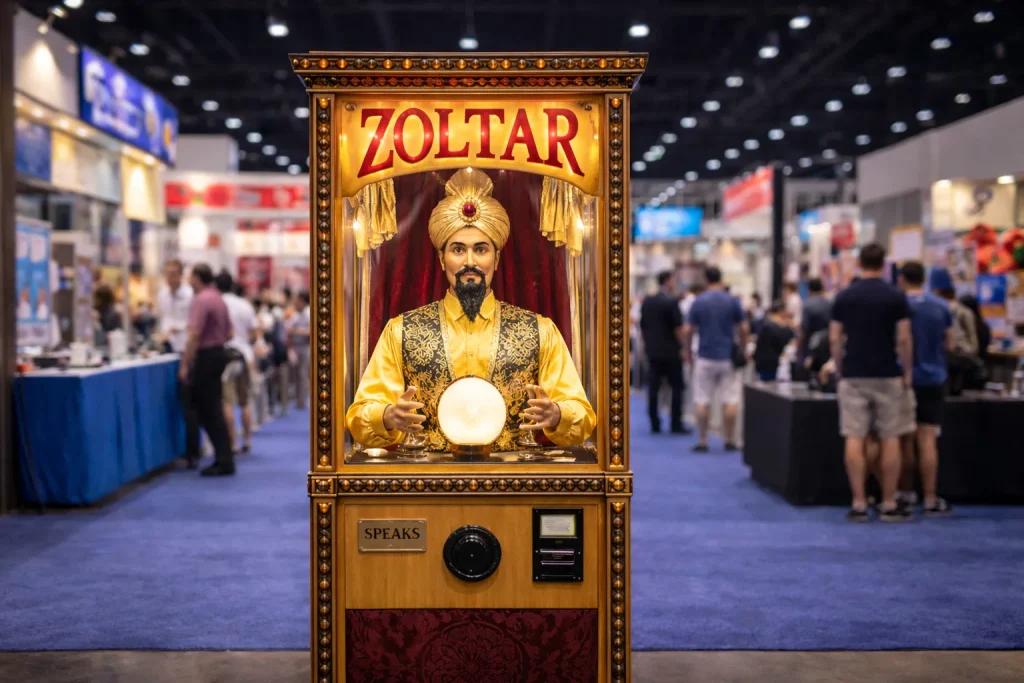
Zoltar gives the booth a different kind of interaction: instead of chasing a score, attendees step up for a fortune and a quick moment of curiosity. Its recognizable presentation can work as a conversation starter and give guests an easy reason to participate between other booth activities.
Session Run Time: 1-2 minutes
Space Required: 4 ft x 4 ft recommended play area
Capacity: 1 guest at a time; approx. 20 participants per hour
20. Ski Simulator
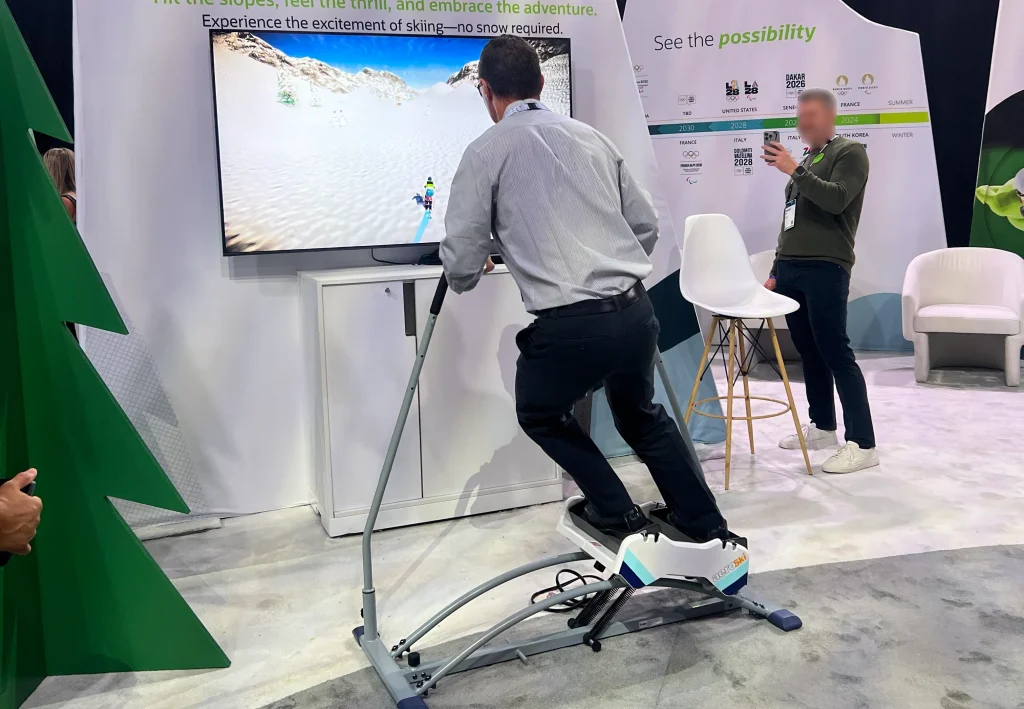
Bring the feeling of the slopes onto the trade show floor with a physical challenge attendees can see in action. Guests shift, react, and test their technique while coworkers watch from nearby, making the movement part of the draw.
Session Run Time: 2-3 minutes
Space Required: 8 ft x 5 ft recommended play area
Capacity: 1 player at a time; approx. 30 participants per hour
Power: 110V
21. Snowboard Simulator
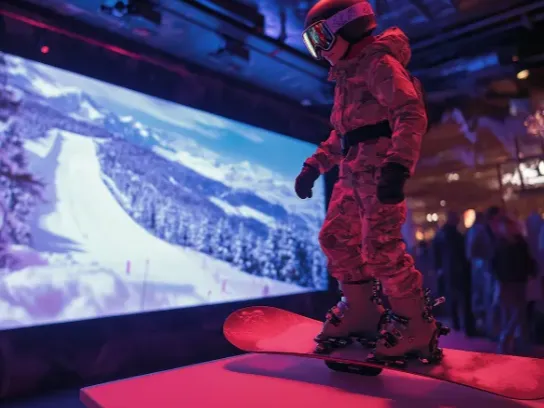
The Snowboard Simulator turns balance into a visible, easy-to-follow challenge that can pull coworkers into the competition. Guests step onto the board, test their control, and give the next participant a performance to beat while spectators follow along.
Session Run Time: 2-3 minutes
Space Required: 8 ft x 8 ft recommended play area
Capacity: 1 player at a time; approx. 30 participants per hour
Power: 110V
22. Air Graffiti Wall
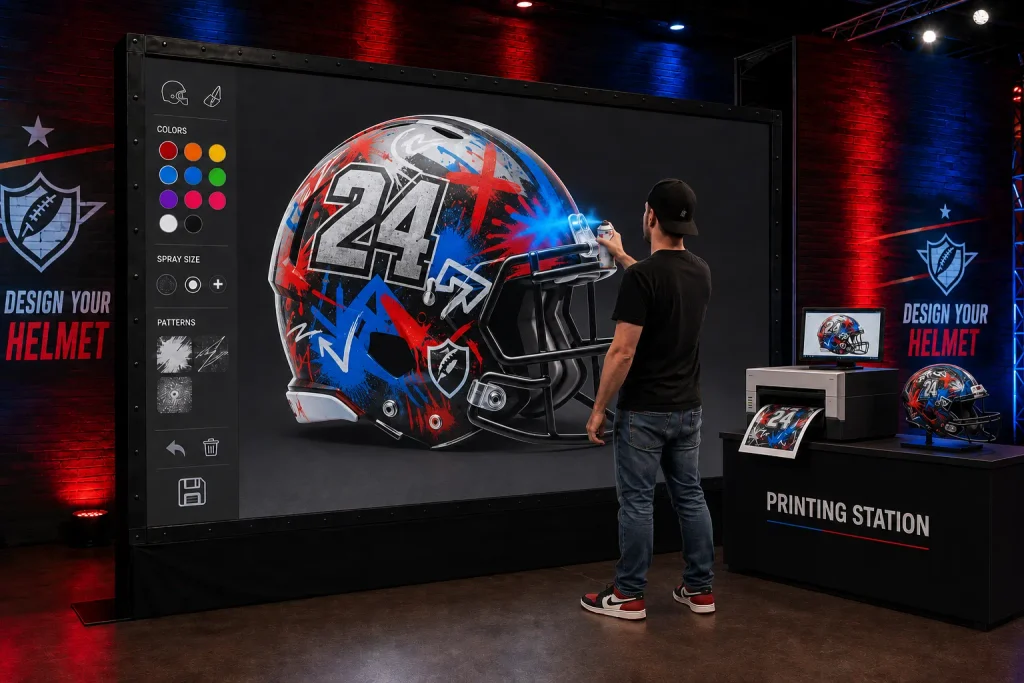
Air Graffiti Wall lets attendees create instead of simply pose. Guests use the digital spray-paint experience to build their own artwork, giving the interaction a hands-on creative angle that can be adapted around a brand or event theme.
Session Run Time: 4-5 minutes
Space Required: 10 ft x 10 ft recommended play area
Capacity: 2 players at a time; approx. 30 participants per hour
23. Photo Mosaic Wall
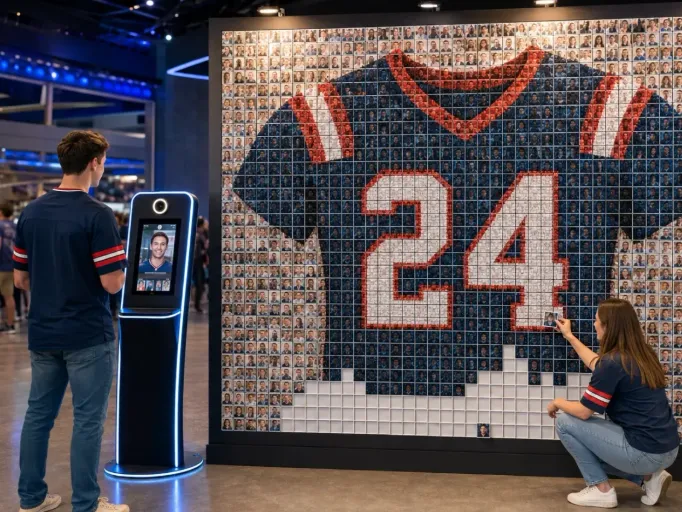
Photo Mosaic Wall turns individual attendee photos into part of something bigger. As guests contribute images, the pieces build toward a larger visual, allowing the activation to evolve as participation grows throughout the event.
Session Run Time: 1-2 minutes
Space Required: 10 ft x 10 ft recommended play area
Capacity: 2 players at a time; approx. 80 participants per hour
24. LED Video Backdrop Corner
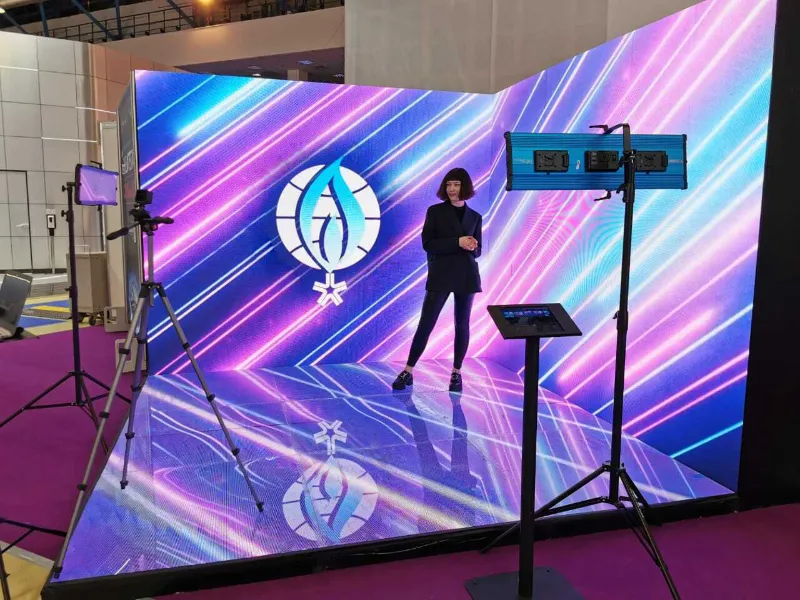
An LED Video Backdrop Corner gives exhibitors a more dynamic setting for photos, video, branded content, or featured booth moments than a static printed backdrop. The display can help visually anchor a space while supporting the campaign creative around it.
Space Required: 8 ft x 5 ft recommended play area
25. LED Party Robot Dancers
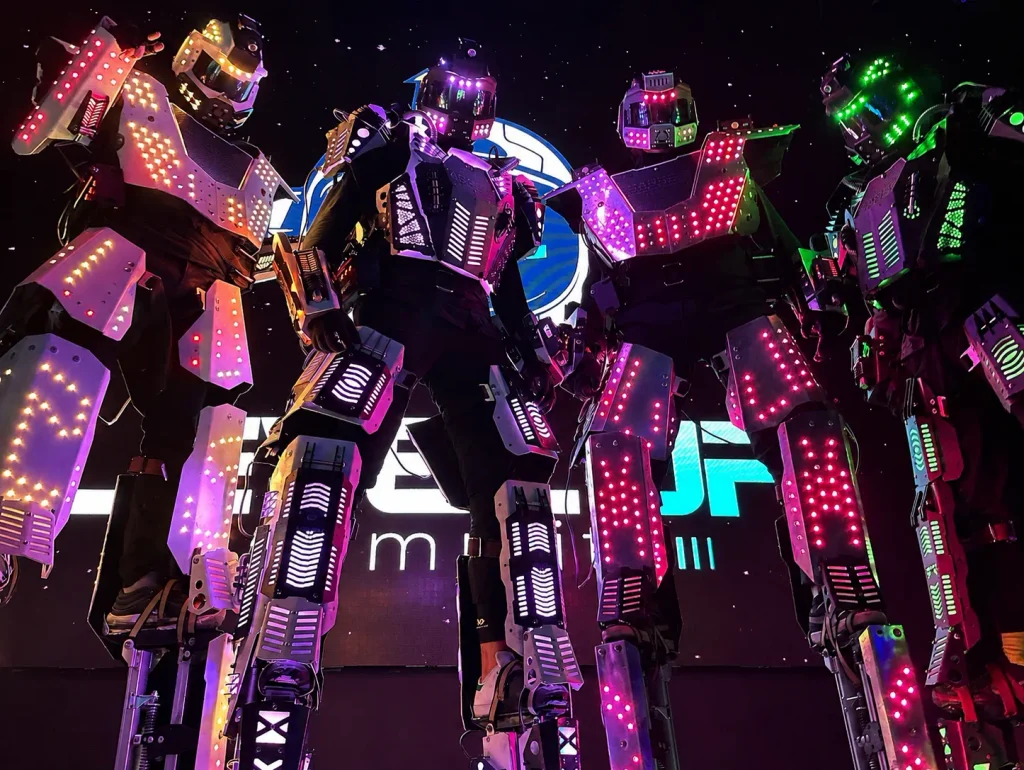
LED Party Robot Dancers bring roaming movement, light, and live entertainment into the event environment rather than asking attendees to come to a stationary game. They can create high-energy moments around a booth, entrance, or event space and give guests an unexpected visual interaction.
Space Required: 8 ft x 8 ft recommended play area
Trade Show Booth Layout Ideas That Invite People In
1. Give the Booth One Clear Focal Point
Trying to make everything stand out usually results in nothing standing out. Choose one visual or experiential centerpiece and build around it. That could be an interactive simulator, oversized LED display, product demonstration, competition area, immersive installation, or another element that attendees can immediately recognize from the aisle. Your supporting graphics and messaging should reinforce that focal point rather than compete with it.
2. Plan for the Crowd You Want to Create
There’s an interesting problem with successful trade show booth ideas: they can work too well. If ten people gather around an attraction but there isn’t enough room for spectators, the crowd can block the entrance or spill into the aisle. Plan where participants will stand, where people will wait, where spectators will watch, and where sales conversations can happen. Traffic shouldn’t simply arrive at the booth. It should have somewhere to go.
3. Keep Your Message Simple
An attendee shouldn’t have to read an entire wall to understand why they should stop. Use concise messaging that answers one of three questions quickly:
What is this?
Why should I care?
What can I do here?
Save the deeper information for conversations once you’ve earned their attention.
Photo and Tech Experiences Attendees Want to Share
The goal isn’t to tell people, “Take a photo and post this.” Build something they want to photograph and take videos of because they genuinely want to.
Choosing a visually appealing experience can work in your favor. Think about what someone walking past your booth actually sees: a coworker trying not to wipe out on a surfboard, someone celebrating a fast lap, or a crowd forming to see if someone can beat the top score. These moments create engagement, reaction, competition, and plenty of opportunities for attendees to start recording.
Sometimes it’s the visual of the experience itself that gets the camera out. A Surf Simulator puts the participant on a board in front of a large wave display, so even before someone tries it, there’s something happening in the booth worth noticing. Add the balancing, saves, wipeouts, and reactions from coworkers, and attendees have plenty to capture without anyone asking them to.
Other experiences naturally create content because people want to document the competition. Put someone behind the wheel of a Racing Simulator, inside a Soccer Reaction Ring, or in front of a Golf Simulator, and suddenly there’s a reason for attendees to gather around. They’re watching the clock, following the score, waiting for the shot, celebrating a win, or recording a friend trying to take the lead. A leaderboard or simple challenge can take that even further by giving the group something to follow throughout the event.
There are other experiences that are interesting to watch simply because they’re different. With a 360 VR Simulator, the movement of the simulator and the participant’s reactions become part of the entertainment for everyone outside of it. The person wearing the headset may be having the actual VR experience, but the people surrounding them are getting a show of their own.
That’s what makes these experiences valuable from a content perspective. You aren’t creating one moment for one participant. You’re creating something happening inside your booth that other people can see, react to, photograph, record, and post on their own socials. When your branding is naturally visible within that environment, the content attendees create can take your brand beyond the booth with them.
A Busy Booth is Great. A Booth That Generates Leads Is Better.
One of the easiest trade show metrics to notice is crowd size, and it is one of the easiest to overvalue. Fifty people surrounding an activation may look impressive, but the more useful question is how many of those attendees interacted with the brand, had a relevant conversation, provided useful lead information, or took an action after participating. The attraction should create the opening, and the booth strategy should determine what happens with that attention.
| STAGE | WHAT HAPPENS |
|---|---|
| Attract | The experience catches attention from the aisle |
| Engage | The attendee participates in the activation |
| Connect | Booth staff naturally start a conversation |
| Qualify | Staff identify whether the attendee is a relevant prospect |
| Capture | Useful contact information is collected |
| Follow Up | The interaction gives sales a reason to reconnect |
Before Show Day: Plan Beyond the Big Idea
Choosing an exciting trade show booth attraction is only part of the planning process. One detail exhibitors can underestimate is the space surrounding the experience itself. The equipment may fit comfortably within the booth, but the complete activation also needs room for the participant, operator, waiting guests, booth staff, and spectators. Power requirements, connectivity, traffic flow, setup, and attendee throughput should also be considered before show day so an experience designed to attract a crowd doesn’t unintentionally create congestion or operational problems.
| PLANNING AREA | WHAT TO CONSIDER |
|---|---|
| Space | Equipment, participant, operator and spectator footprint |
| Power | Electrical requirements and outlet placement |
| Internet | Whether the experience requires reliable connectivity |
| Traffic Flow | Where participants and spectators will gather |
| Throughput | How many attendees can participate per hour |
| Staffing | Who operates the attraction and engages attendees |
| Setup | Delivery, installation and pre-show testing |
| Support | Technical assistance during show hours |
| Teardown | Equipment removal after the event |
Frequently Asked Questions About Trade Show Booth Ideas
Can trade show games and simulators be customized with company branding?
Many interactive event experiences can incorporate branding through equipment graphics, surrounding displays, digital content, signage, photo outputs, or the overall activation environment. For brand activations, customization can help make sure attendees remember the company behind the experience, not just the game they played.
How far in advance should I book interactive entertainment for a trade show?
Earlier is generally better particularly for large shows, customized activations, or events requiring specific equipment. Advance planning gives your rental provider and exhibit team more time to coordinate booth dimensions, electrical requirements, branding, shipping, installation, staffing, and venue logistics.
What trade show booth ideas work well for lead generation?
Look for experiences that naturally create a transition between participation and conversation. Competitions, personalized experiences, photo activations, digital takeaways, and challenges can all incorporate simple lead capture. The goal isn’t simply collecting as many scans as possible, it’s creating opportunities to identify and continue conversations with relevant prospects.
How much space do interactive trade show booth attractions require?
It depends heavily on the experience. Some interactive games and technology can work within relatively compact booths, while simulators and larger activations require additional space for equipment, participants, spectators, and safe traffic flow. Your attraction should be selected around the booth footprint rather than added after the booth has already been designed.
How can I make my trade show booth more interactive?
Start by giving attendees something meaningful to do rather than only something to look at. Depending on your booth size and goals, this could include a simulator, game, competition, VR experience, interactive digital display, AI photo activation, live demonstration, or hands-on product challenge.
Final Thoughts
The best trade show booths give people a reason to stop, and an even better reason to remember who made them stop in the first place.
That’s ultimately what separates effective trade show booth ideas from attractions that simply create noise. A crowd is great, but the real opportunity comes from turning that attention into participation, conversations, brand recognition, and qualified leads. Whether you use a competitive simulator, an immersive VR experience, interactive technology, or a completely custom activation, every element should have a purpose beyond looking impressive.
As you prepare for your next trade show, think about the experience you want attendees talking about when they leave the show floor. If your booth can create that moment while naturally connecting it back to your brand, you’ve done more than attract traffic, you’ve created an interaction people are far more likely to remember.
At Los Virtuality, we help exhibitors turn booth space into interactive experiences with simulators, VR, competitive games, AI and photo technology, and custom-branded activations available for trade shows nationwide. Ready to give attendees a reason to stop? Explore our trade show entertainment rentals or request a custom quote for your next show.